
From Seville to Ronda: Traveling Through Spain’s Layered Past

In Spain, history does not introduce itself quietly. It rises above you in stone, in ornament, in contradiction.
We stood looking up at the cathedral dome in Sevilla and the surrounding architecture, and what struck me first was not harmony, but layering. One line belonged to one age, another arch to another faith, another wall to another ruler. From Romans, Ottomans and Christians.
It was beautiful, yes, but also unsettling in the most interesting way. Seville does not let you believe that history is smooth.
Seville touched us
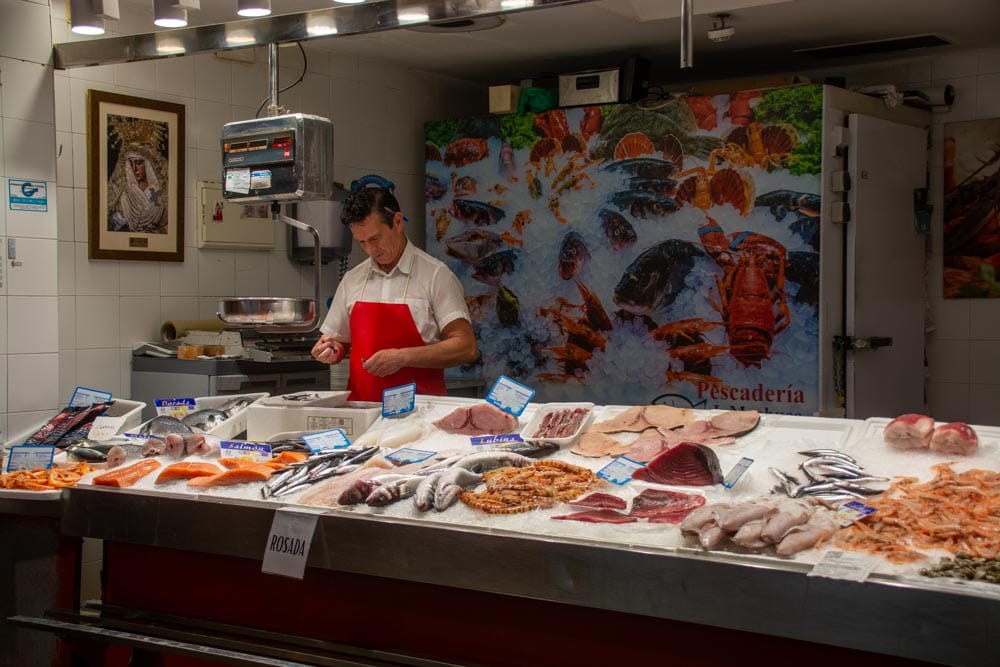
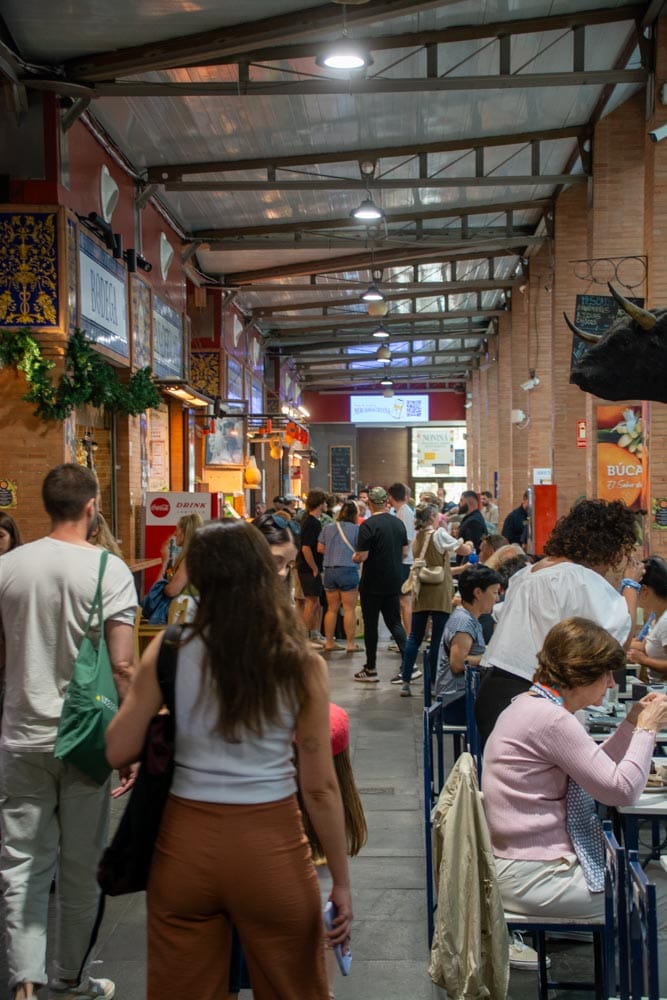
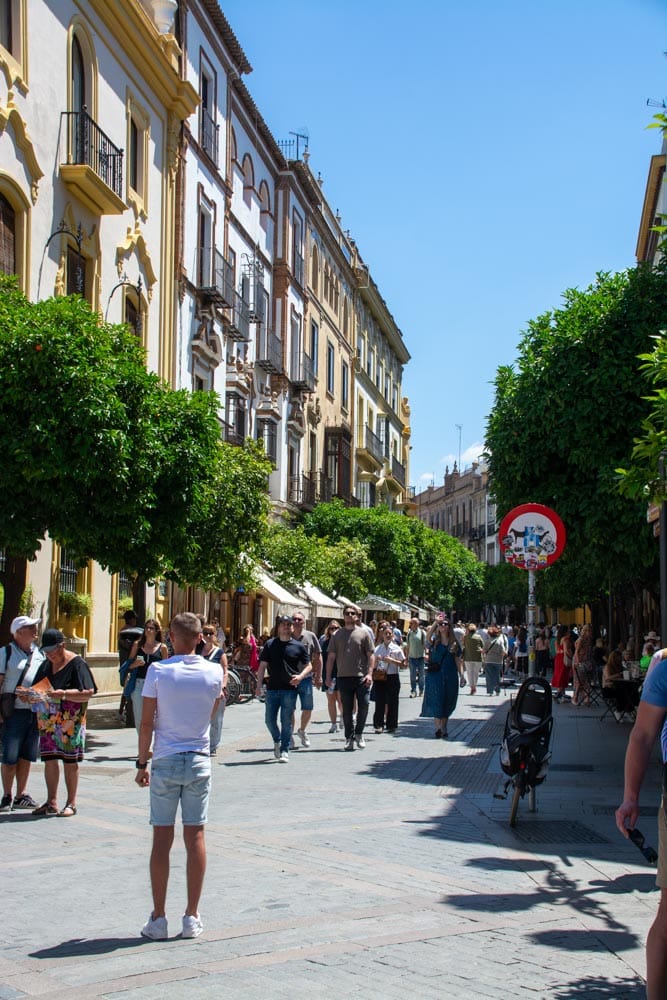
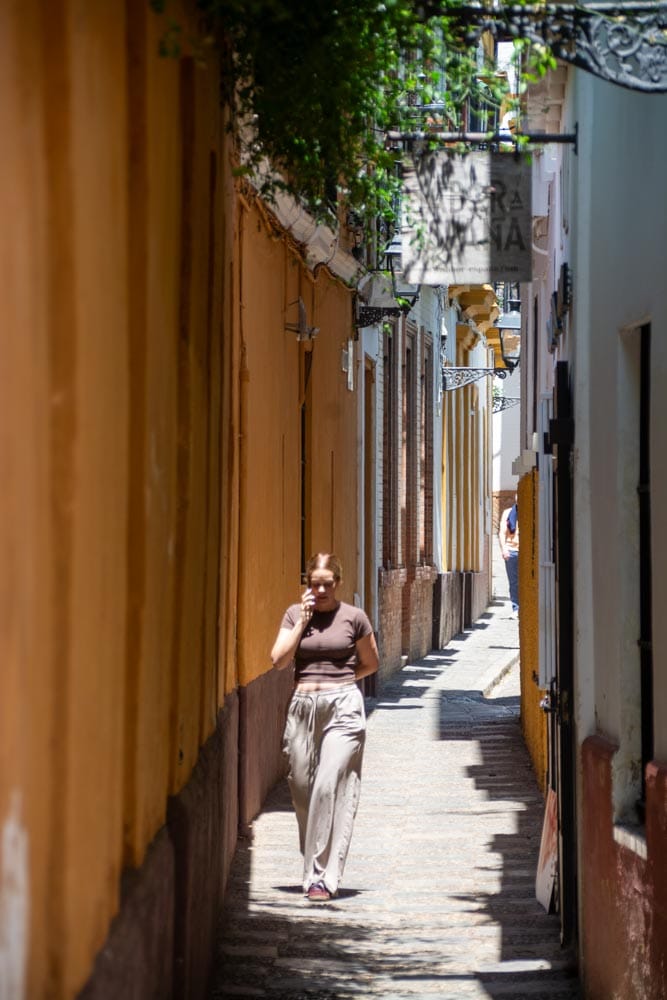
Seville felt alive from the very first minute. Narrow streets opened into tiny squares, small restaurants spilled warm light onto the pavement, plates arrived that seemed to carry the whole confidence of southern Spain, and people were outside as if the city itself preferred company. There was music somewhere, always conversation, always movement. It was in Seville that we understood why people fall in love with Spain, and for us it was especially Seville that did it. Not only because it is beautiful, but because it feels inhabited so intensely, as if the centuries never pushed life out of it.
And yet those stories are everywhere
To travel through Andalusia is to move through the remains of al-Andalus, the Muslim-ruled parts of the Iberian Peninsula that began after 711, when Muslim-led forces crossed from North Africa and rapidly defeated the Visigothic kingdom. Over time, Islamic rule in Iberia took many forms: first as a province of the Umayyad world, then as the independent Emirate and later Caliphate of Córdoba, and eventually as a patchwork of smaller taifa kingdoms, with later North African dynasties such as the Almoravids and Almohads also shaping the region. This was not a single static civilization, and it was not a paradise. But neither was it merely an occupation waiting to be erased.
In the best moments, there was coexistence, exchange, scholarship, trade, architecture, poetry, irrigation, science, and a level of urban sophistication that helped make cities like Córdoba, Seville, and Granada legendary. Christians, Muslims, and Jews lived in proximity, sometimes fruitfully, sometimes under clear hierarchies and pressures. The word coexistence can be too soft if it hides inequality, but the word conflict is too narrow if it ignores how much these cultures shaped one another.
Seville carries all of that in plain sight
Its great cathedral stands on the site of the former Almohad mosque. The Giralda, today one of the city’s great Christian symbols, began as a minaret. This is one of the most striking truths a traveler encounters in Spain: conquest did not produce a clean break. Christian rulers often built over Muslim spaces, converted mosques into churches, altered them, renamed them, and tried to fold victory into the landscape itself. But stone is stubborn.
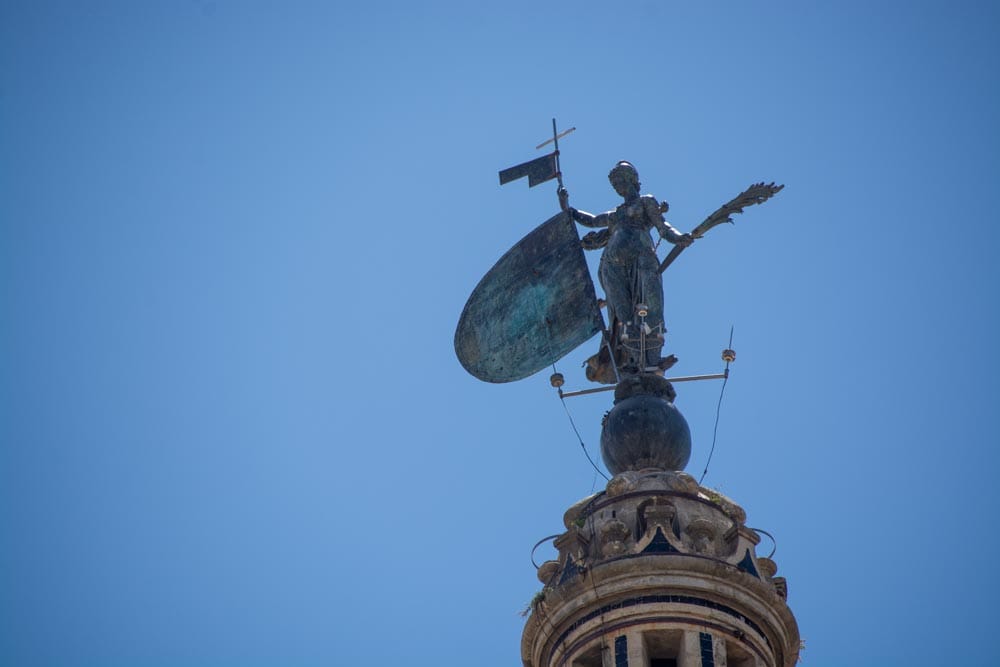
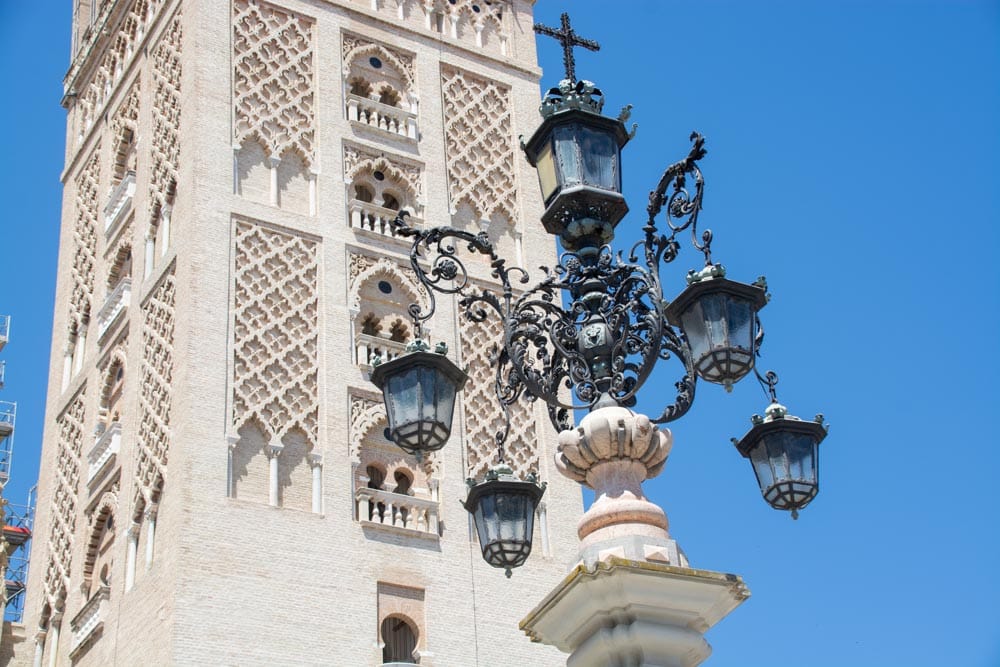
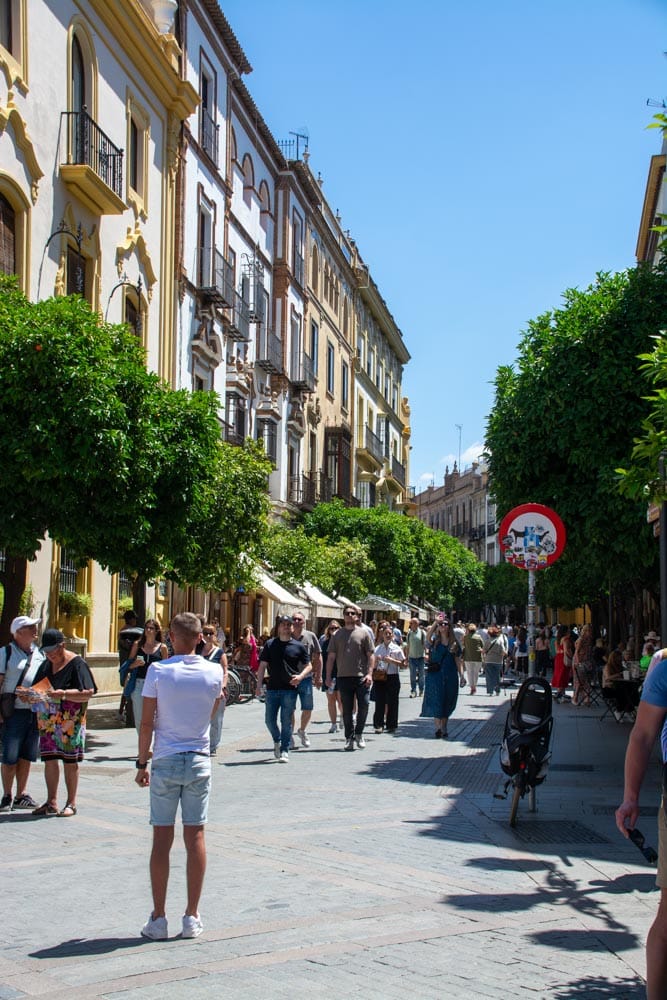
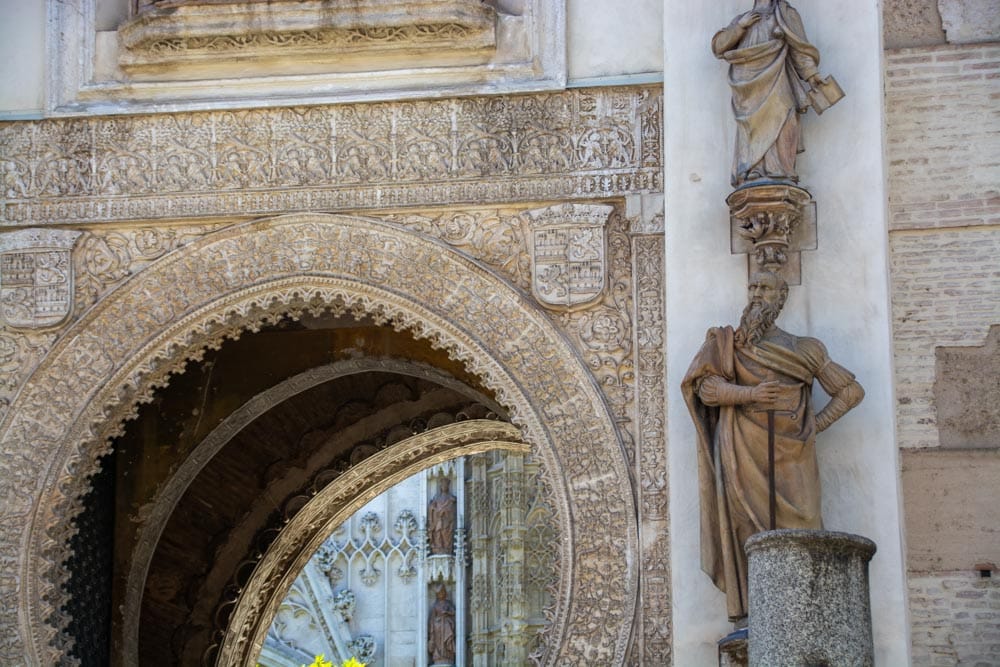
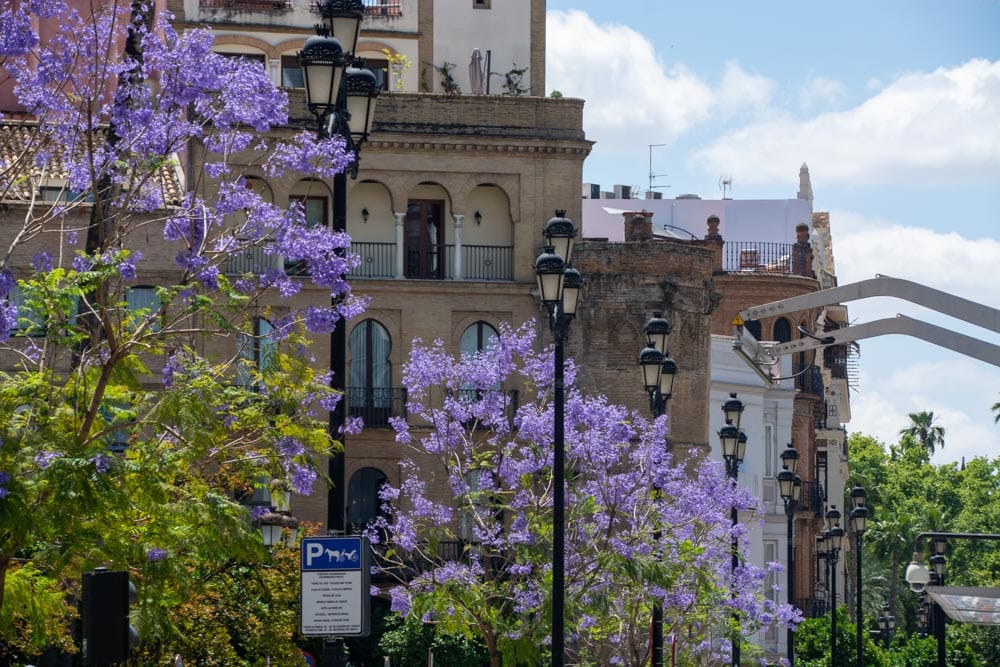
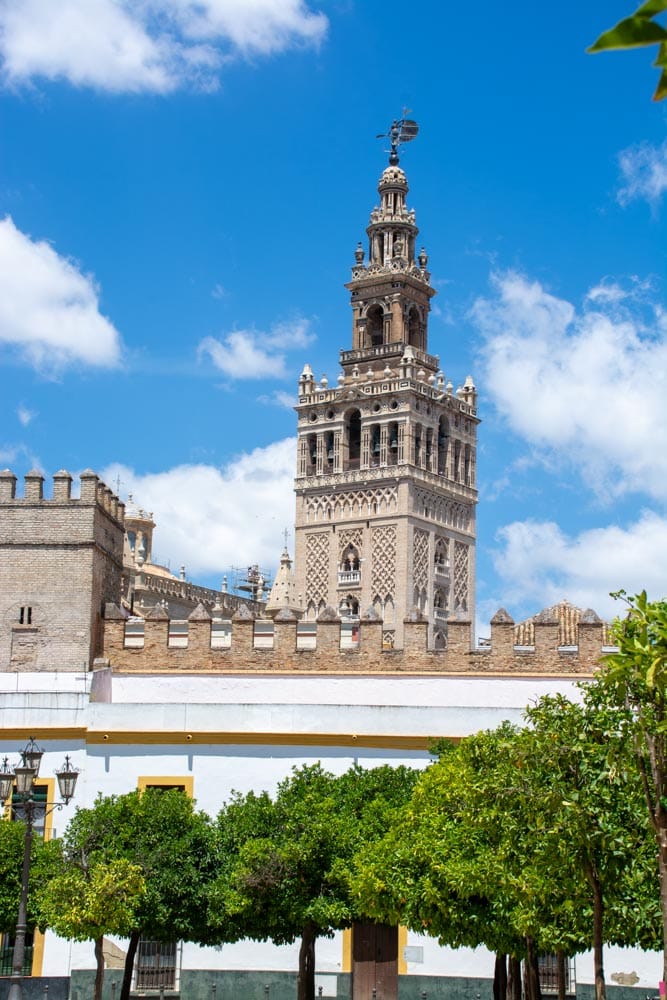
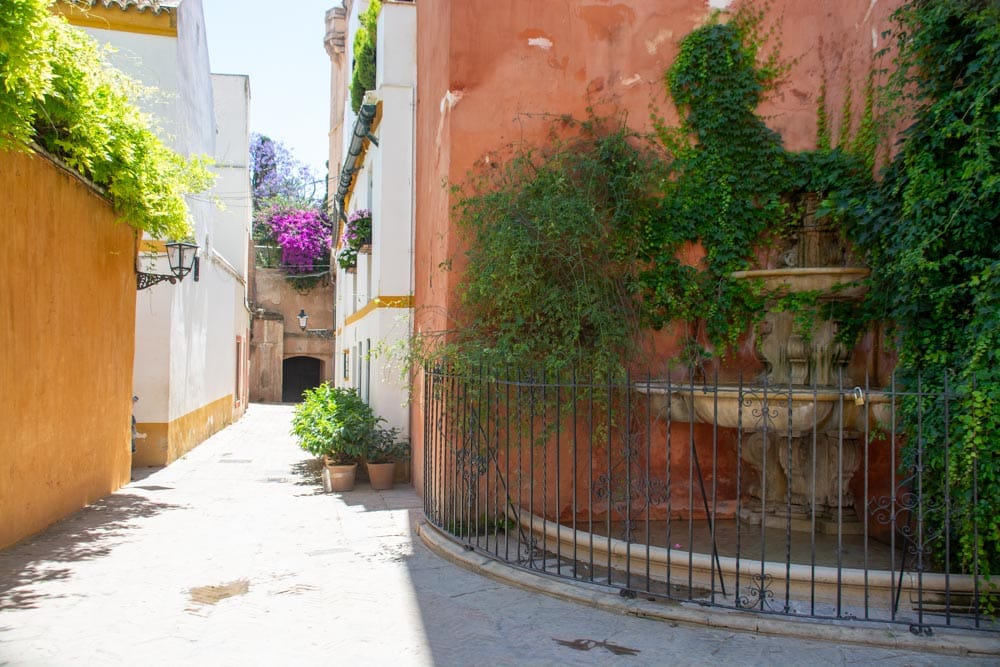
Proportions remain. Arches remain. Courtyards remain. A traveler can still see the vibrant city life of today through the layers of stone.

The story of the Reconquista feels real here
The Reconquista was not one single campaign, nor a simple tale of one side slowly and inevitably reclaiming what had been lost. It stretched over centuries, with shifting alliances, rival Christian kingdoms, Muslim dynasties in competition with one another, local deals, marriages, betrayals, and periods of relative stability interrupted by war. The fall of Toledo in 1085 was a major turning point. So was the great Christian victory at Las Navas de Tolosa in 1212, which weakened Almohad power and helped open much of southern Iberia to Christian conquest. Seville itself was taken by Ferdinand III of Castile in 1248. Granada, the last Muslim-ruled kingdom in Iberia, fell much later, in 1492.
Seen from a distance, those are dates. Seen while walking through Seville, they become rooms, towers, shadows, and reused walls.
Ronda, another beauty on the road
If Seville seduces you through movement, Ronda stops you through position. It feels protected by nature before it ever feels protected by men. Set dramatically above the deep cliff, it seems less like a town that happened to be built there and more like a place chosen because it could resist. Even now, arriving as a visitor with a camera and a day bag, you can understand immediately why geography mattered here. Ronda has the air of a fortress, even when the sun is bright and the café tables are full.
Its historical role in the long Christian-Muslim struggle was real, even if modern travel shorthand sometimes oversimplifies it. Ronda was an important stronghold in Nasrid territory and was conquered by Christian forces in 1485, during the final Castilian campaign against the Emirate of Granada.
Standing there, looking across the land, you feel why places like this mattered so much. Control of a town like Ronda was not just symbolic. It was strategic, geographical, and psychological.
Ronda is beautiful, without question. The architecture is stunning, and some views are so dramatic they almost seem invented.
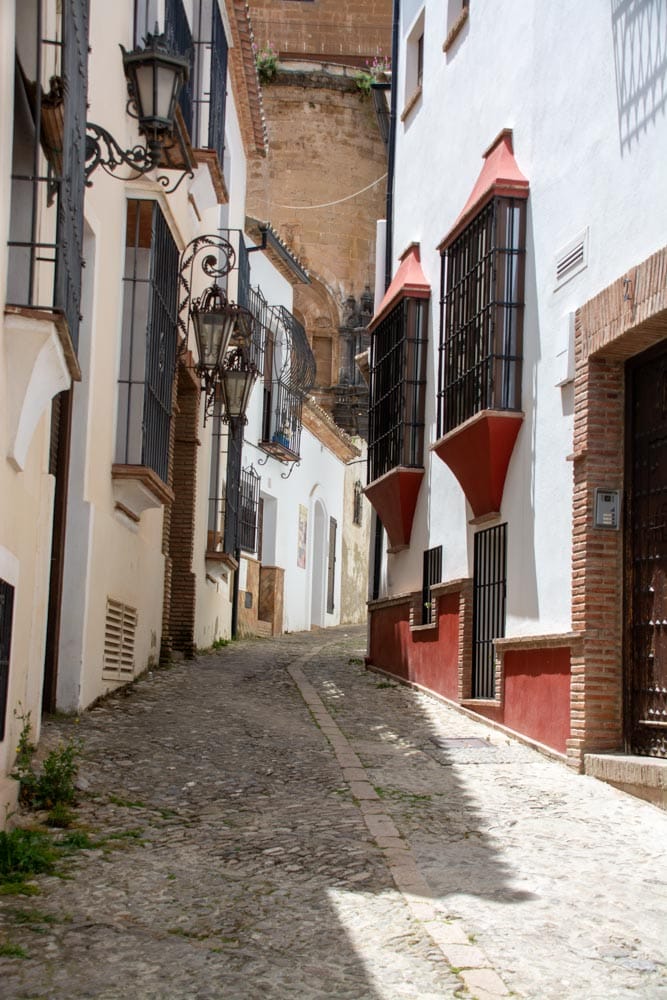
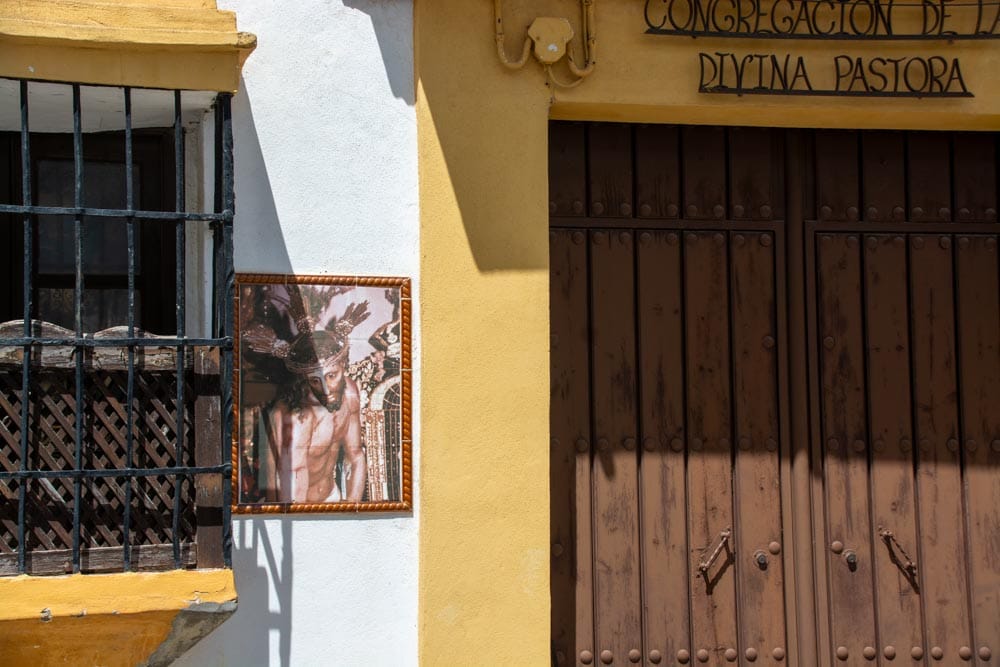
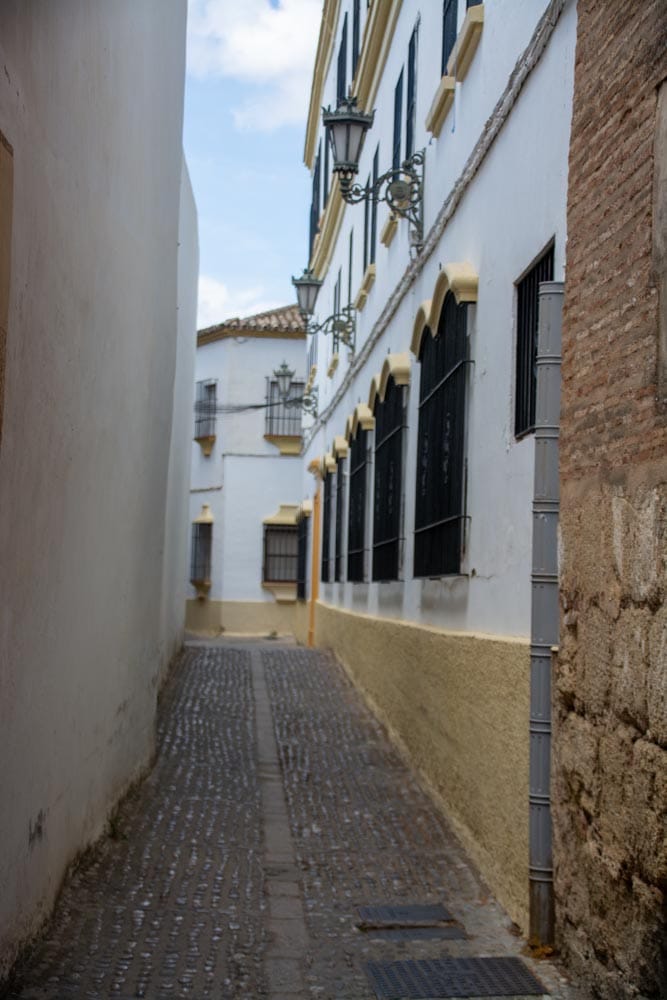
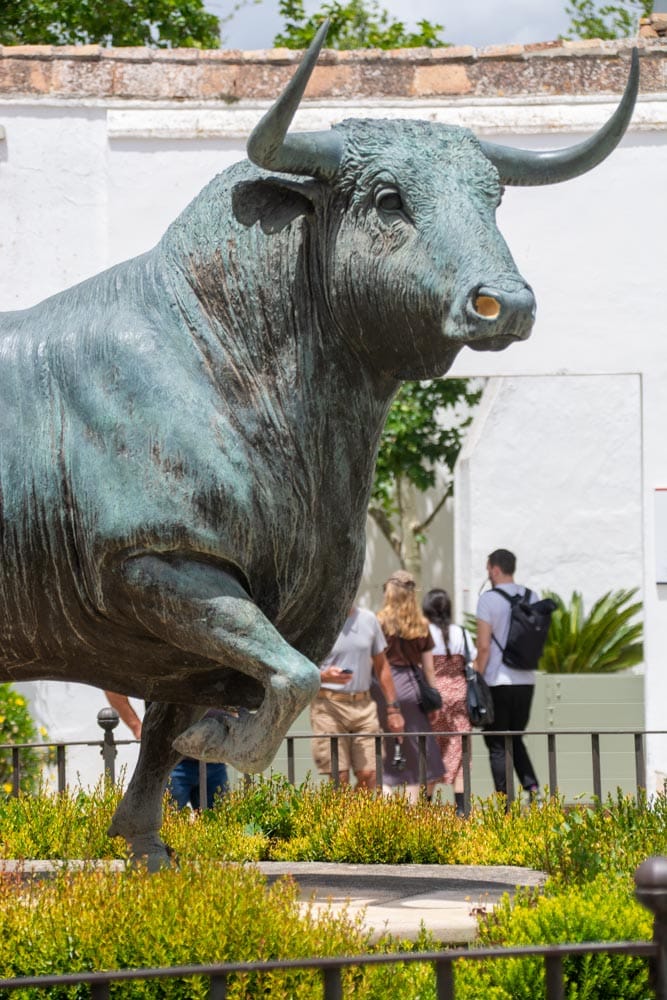
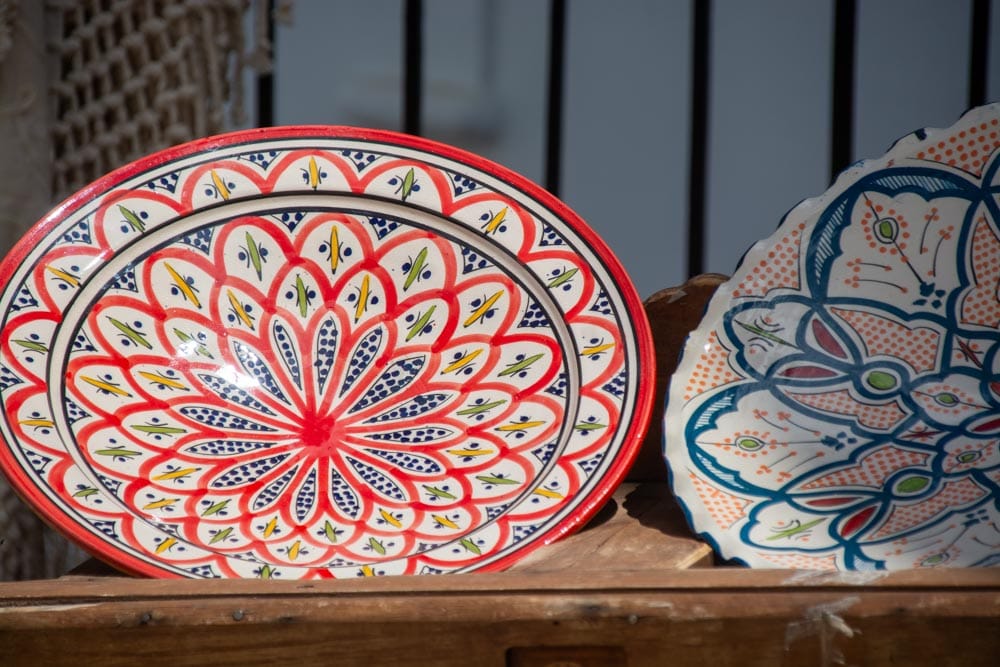
But our feeling there was different from Seville. Ronda felt more touristy, shaped more visibly by the rhythm of visitors arriving in waves, especially bus tourists coming in from the coast. Beauty was still there, absolutely, but it was filtered differently, interrupted more often. Seville had drawn us in as a living city. Ronda impressed us as a spectacular one.
Still, Ronda has something special: the sensation that topography itself is part of the history lesson.
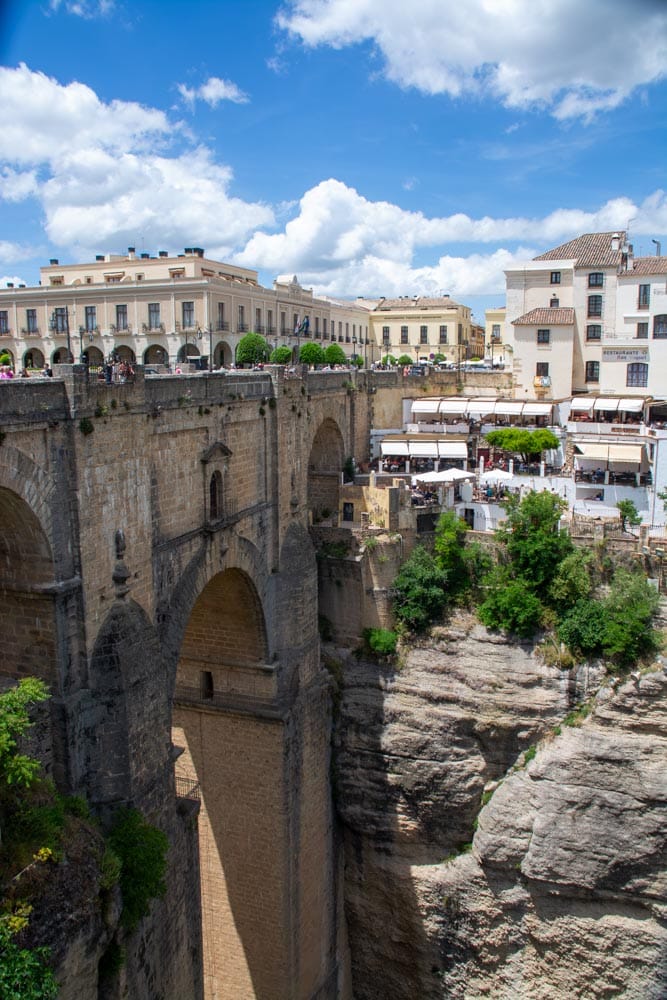
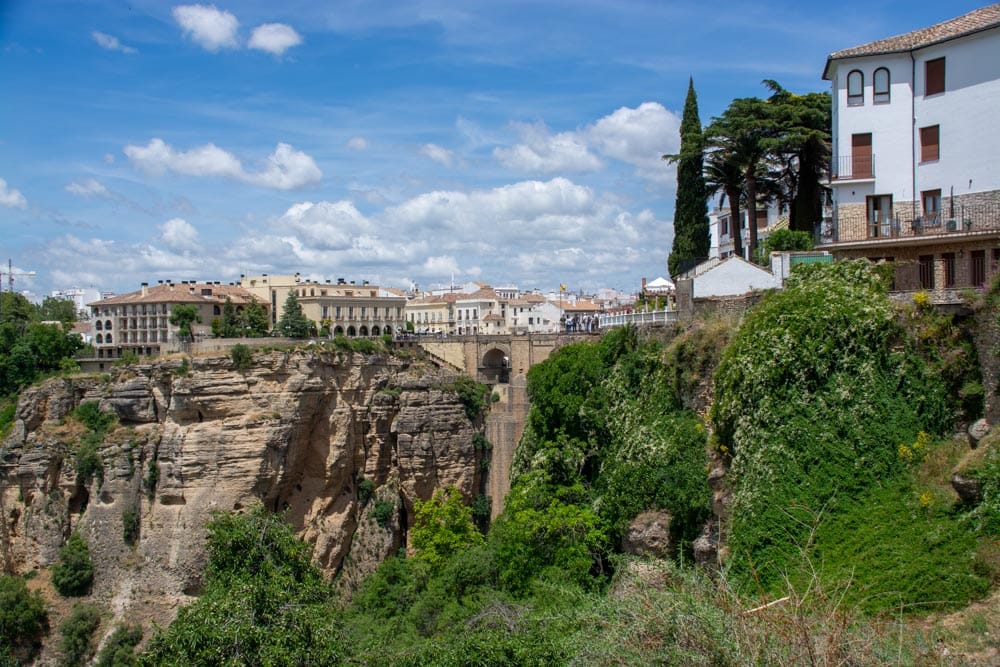
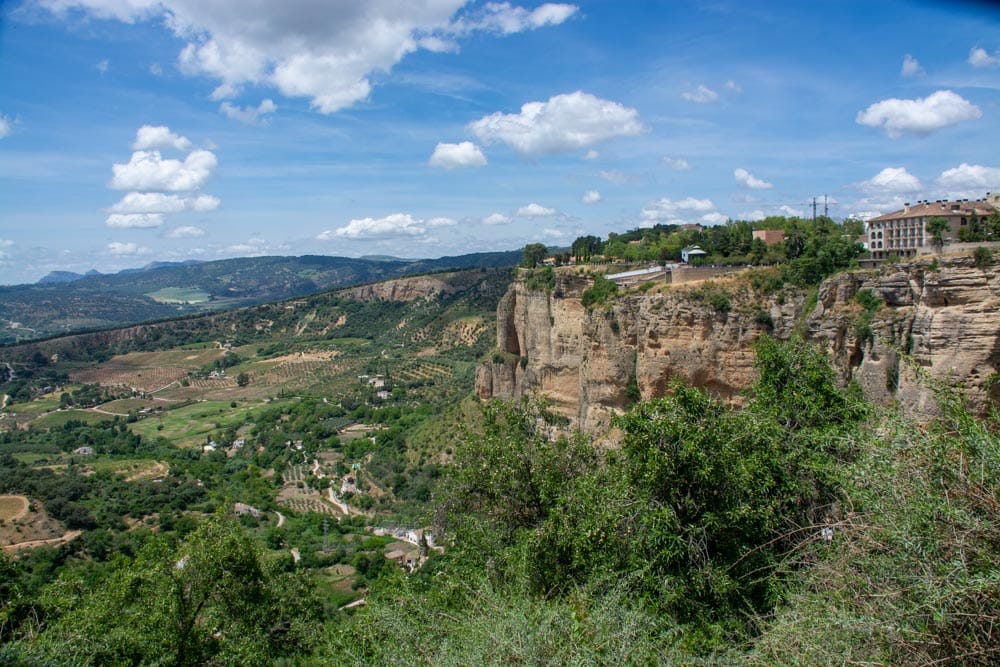
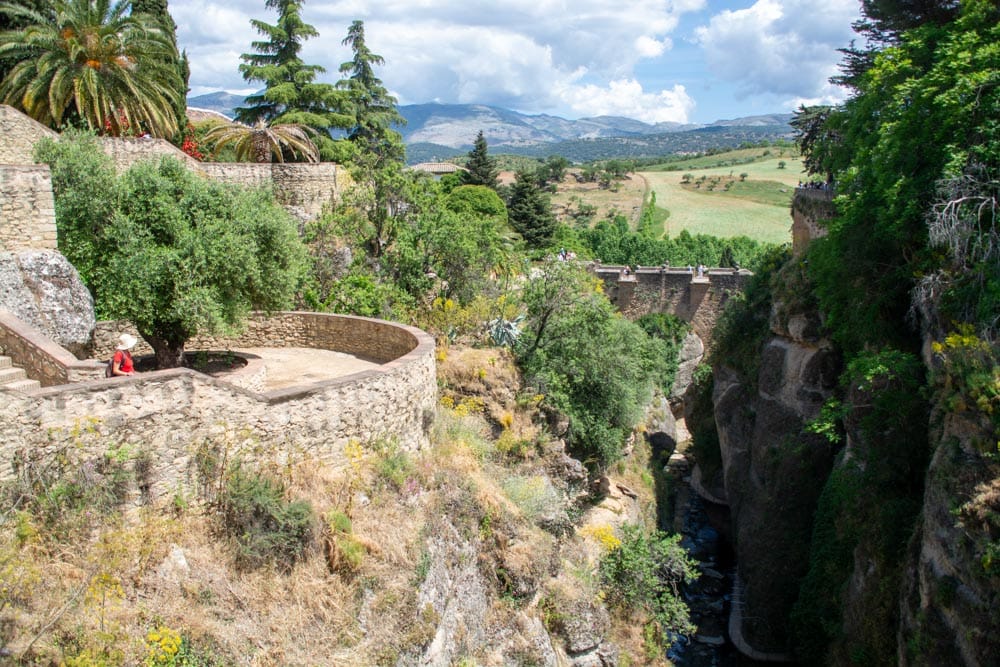
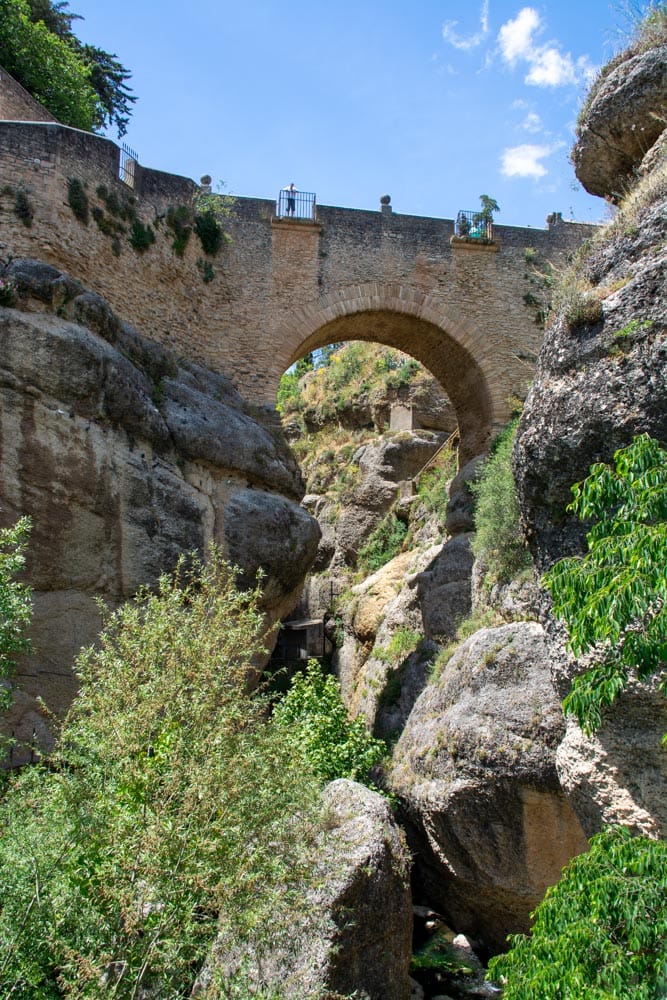
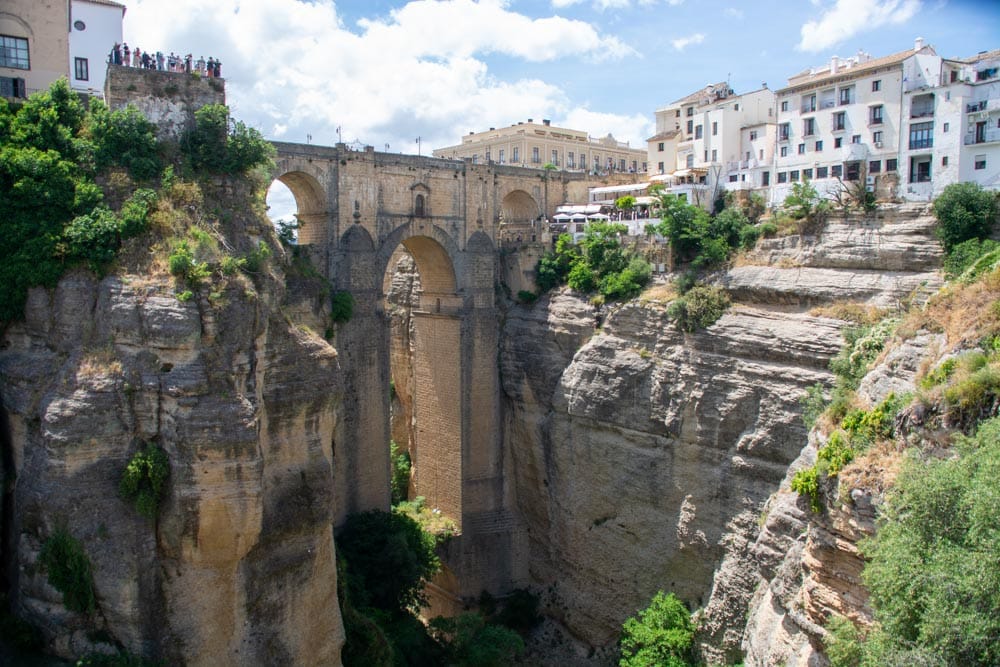
Ronda clings to a cliff like a natural fortress, making it easy to see why this dramatic town was once so hard to conquer
A place like this helps explain why the Reconquista took so long and why it cannot be understood only as a clean religious line dividing two fixed worlds. Mountains, gorges, walls, supply lines, dynastic weakness, local loyalties, and political timing mattered just as much as sermons and banners.
Travel often rescues history from cliché
In books, one can speak in large categories: Muslim rule, Christian reconquest, conquest, conversion, coexistence. On the road, those abstractions become visible in far more human ways. A minaret becomes a bell tower. A mosque becomes a cathedral or vice versa. An old urban pattern survives even when the religion that shaped it has been pushed out. A beautiful square exists because a harsher story once unfolded there. You begin to understand that civilizations do not simply replace one another. They scar, borrow, overwrite, and remember.
And memory does not always obey the victors
Christian rulers in Spain often tried to suppress or absorb the Islamic past, after conquest. Sacred places were rededicated. Muslim and later Morisco communities faced pressure, expulsion, or worse. Architecture was altered to proclaim new power. Yet what they sought to dominate could never be fully removed. The roots remained in plasterwork, in courtyards, in city plans, in water systems, in language, in agricultural patterns, and in the very atmosphere of Andalusian cities. What remains is not a pure survival of the past, but neither is it a successful erasure.
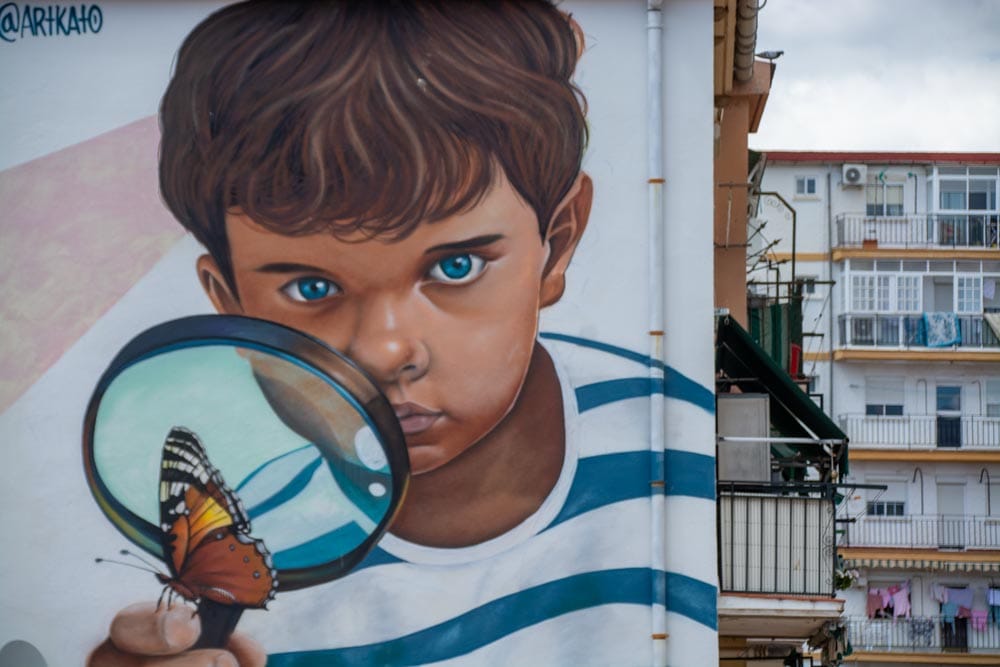
History is never as clean as ideology wants it to be.
This is the quiet lesson traveling can offer.
Living together across very different cultures has often been difficult, sometimes violent, sometimes unexpectedly fruitful, and often both at once. What travelers see are the remnants of what was left behind after power changed hands. Conquerors may destroy, convert, rename, and try to erase, but they rarely succeed completely. The older roots remain visible.
If history could be wiped away entirely, we would lose not only beauty, but also the chance to learn from what human beings have done to one another, and more importantly with one another.
Explore. Dream. Discover.