
At the End of a Broken Road

For weeks, we kept checking the same small place on Google Maps. A friend of us recommended a small restaurant we have to visit.
Pedra da Casca. A tiny coastal restaurant a few kilometers south of Sines. Sweet, almost hidden, the kind of place that starts living in your head before you arrive. But every time we checked on Google Maps, it said the same thing: temporarily closed.
That was odd. The season had already started. Why would a place like that be closed?
Time passed and while waiting for this place to open, we were already much farther south. Going back made little practical sense. It was one of those ideas that sounds less clever the longer you explain it. Still, the place kept pulling at us, despite it was closed. So one day we gave in to that obsession and drove two hours back north.
Not because we needed a restaurant. Not because it was efficient. Simply because curiosity hit us.
The end of the road arrived before the answer did. We got almost all the way there and then the road stopped.
Less than 500 meters before Pedra da Casca, we stood in front of a destroyed bridge. Storms at the beginning of the year had torn the bridge apart completely, and a construction company was already building a replacement. Suddenly the mystery solved itself. This, most likely, was why the restaurant was still closed.
For a moment, that could have been the end of the story. A long drive back for a dead end. A strange little disappointment. The kind you laugh about later.
But we looked at the map again
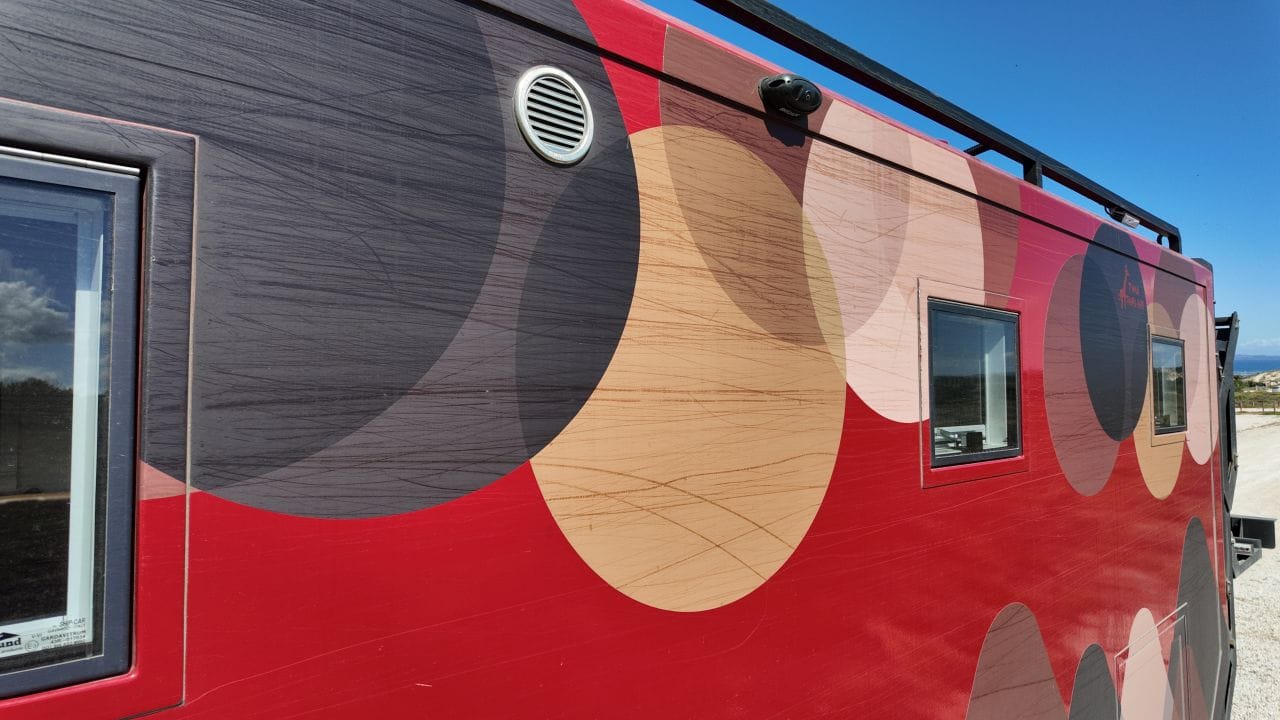
There was a small field track that seemed to reach the other side of the bridge from inland. So we turned around, drove back a bit, went farther south, and then took a right turn into a small wooded area. The path was narrow. Too narrow, actually. Branches hung too low for the truck, and we knew the paint of our truck would not come out untouched.
At home, scratches on a vehicle can feel painful. Out on the road, they sometimes become part of the story. Not only today. We jokingly call them rallye-stripes, the result of keeping Emil in species-appropriate conditions.
It was not heroic. It was mostly stubborn. And a little absurd. But it worked.
Before we reached the broken bridge, camper vans were packed together in the accessible part of the beach area.
On the far side of the broken bridge, the whole mood changed. Everything suddenly opened up. Hardly anyone takes that detour, and that meant we found something rare without planning it: Space.
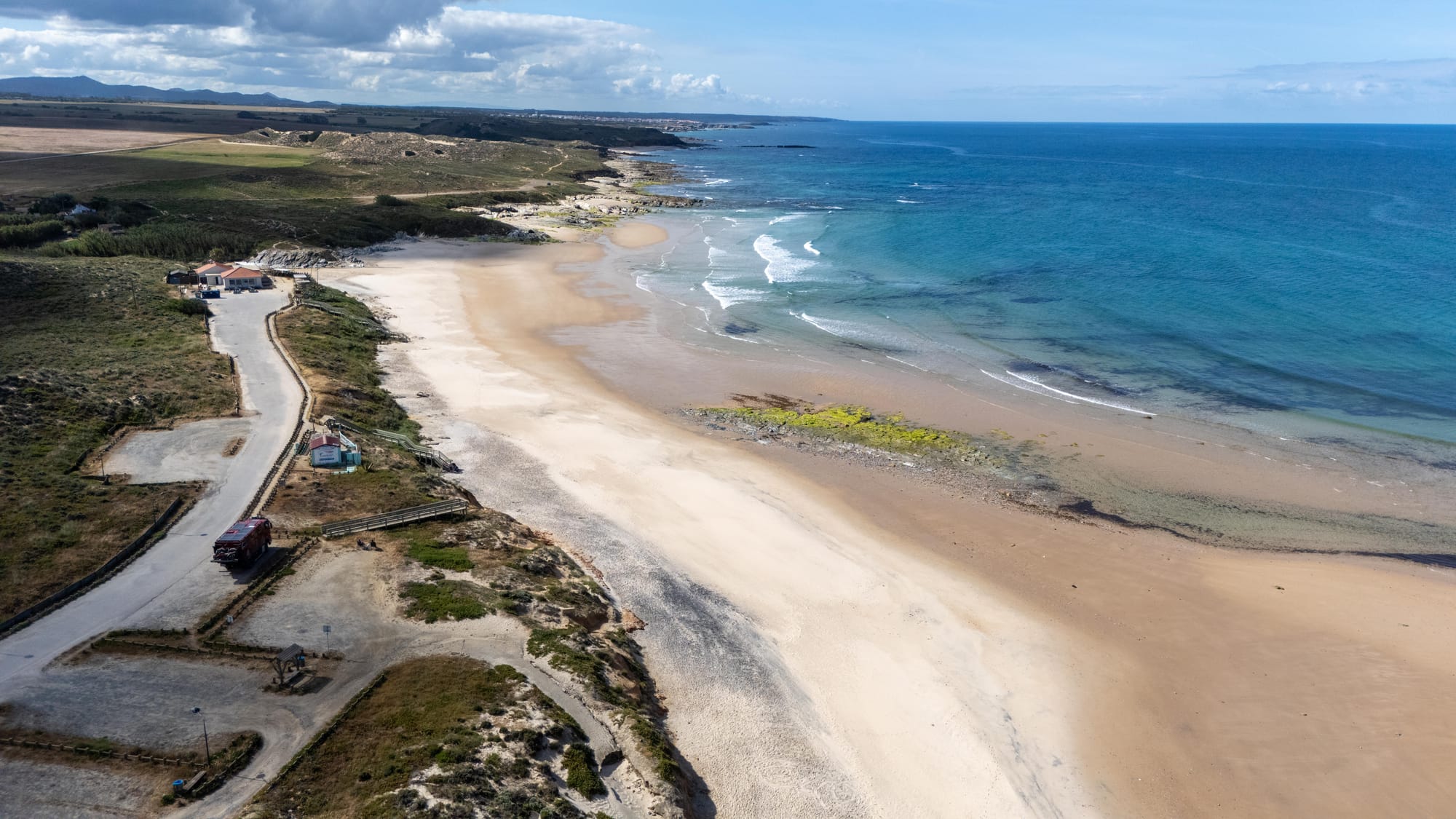
We parked near to the closed restaurant at the beach and stayed for three full days. The place was beautiful in a rough, unsmoothed way.
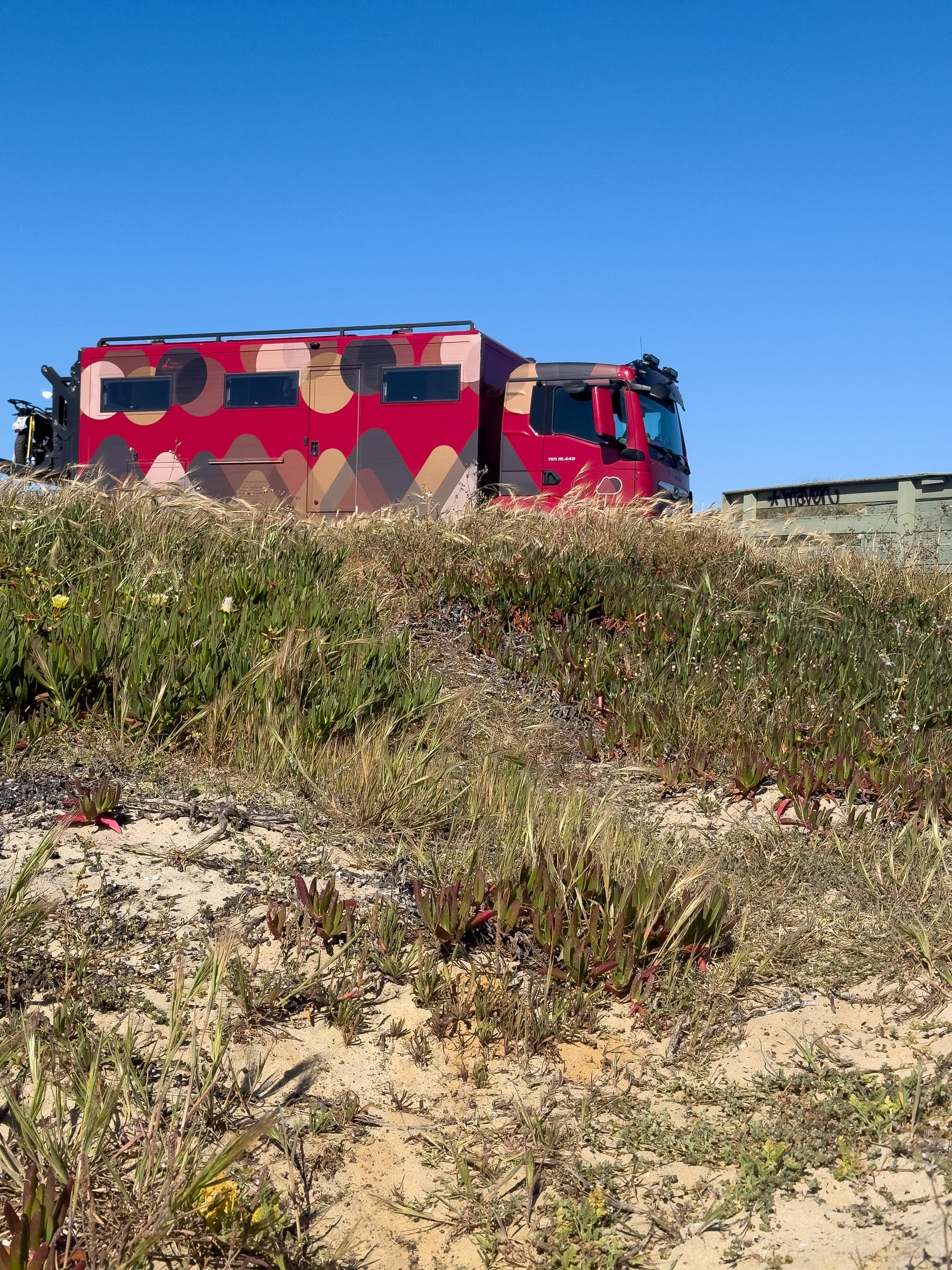
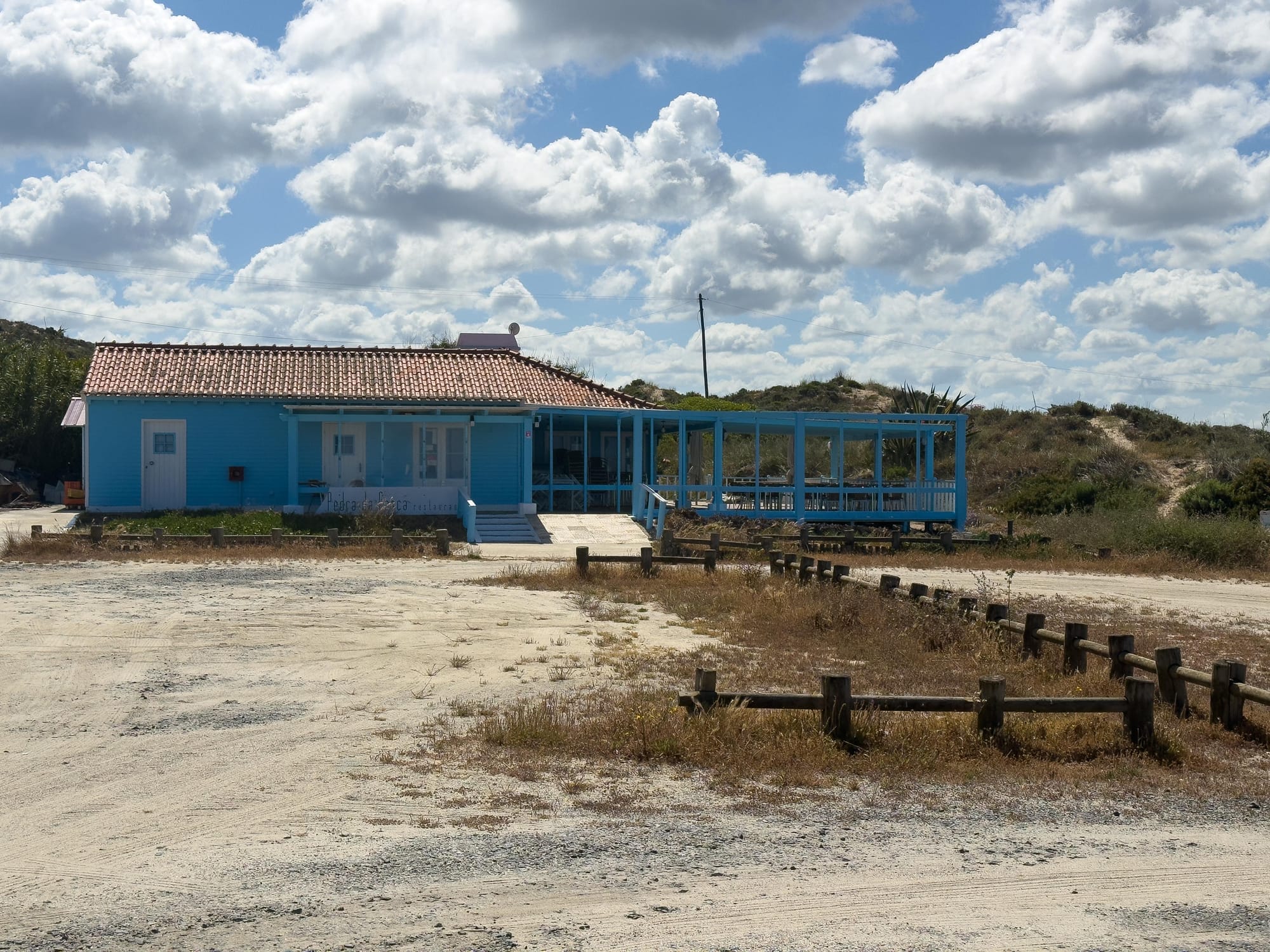
Our camp spot near Pedra da Casca.
Heavy waves rolled in and broke onto a small sandy beach framed by high cliffs. The sea did not look calm or decorative. It looked strong. Busy. Uninterested in our plans. We spent hours just watching it, listening to the force of the water smashing against the cliffs, feeling small in a way that was not uncomfortable at all. Quite the opposite.
Some places make you feel important. Others make you feel correctly sized.
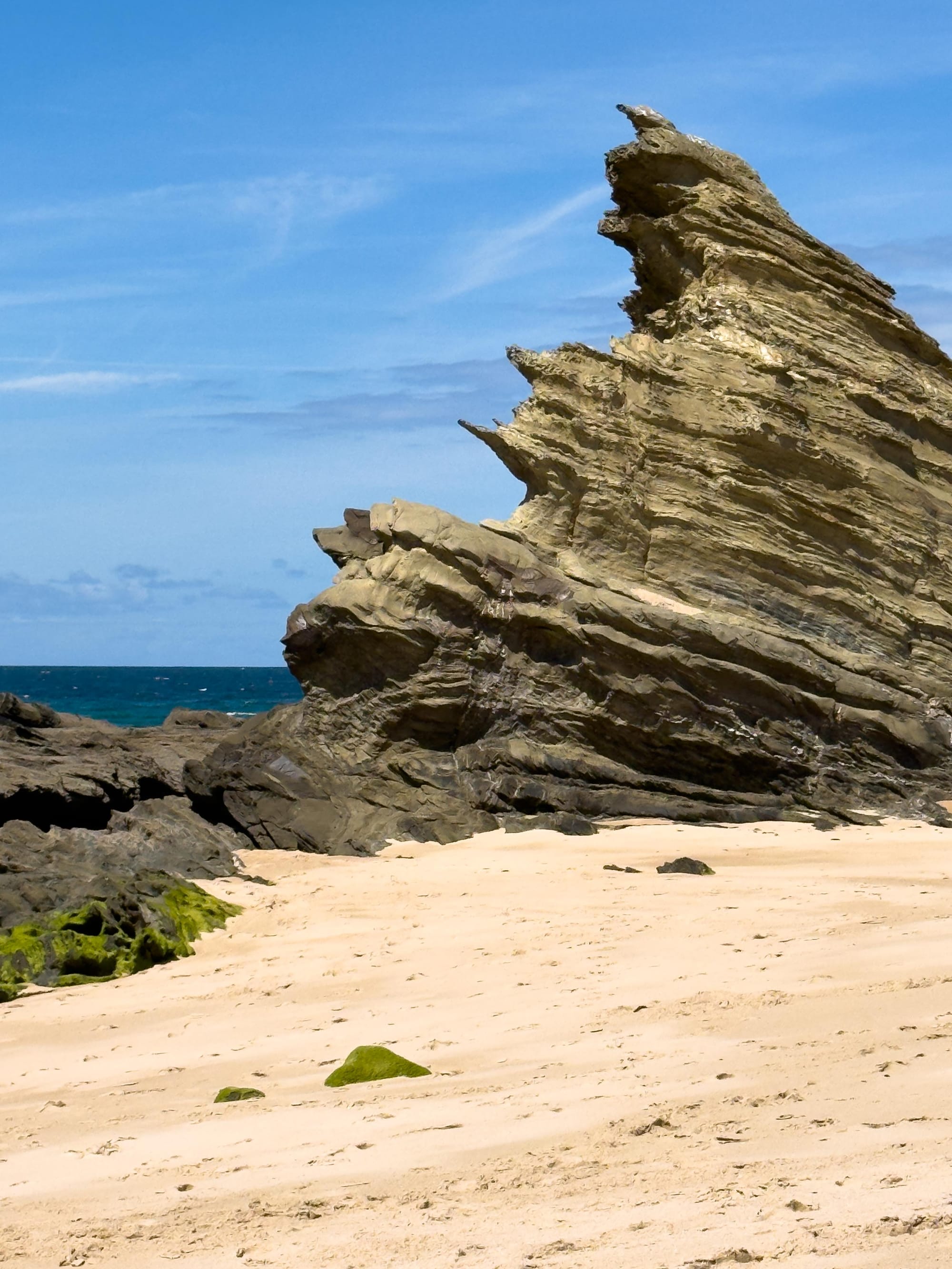
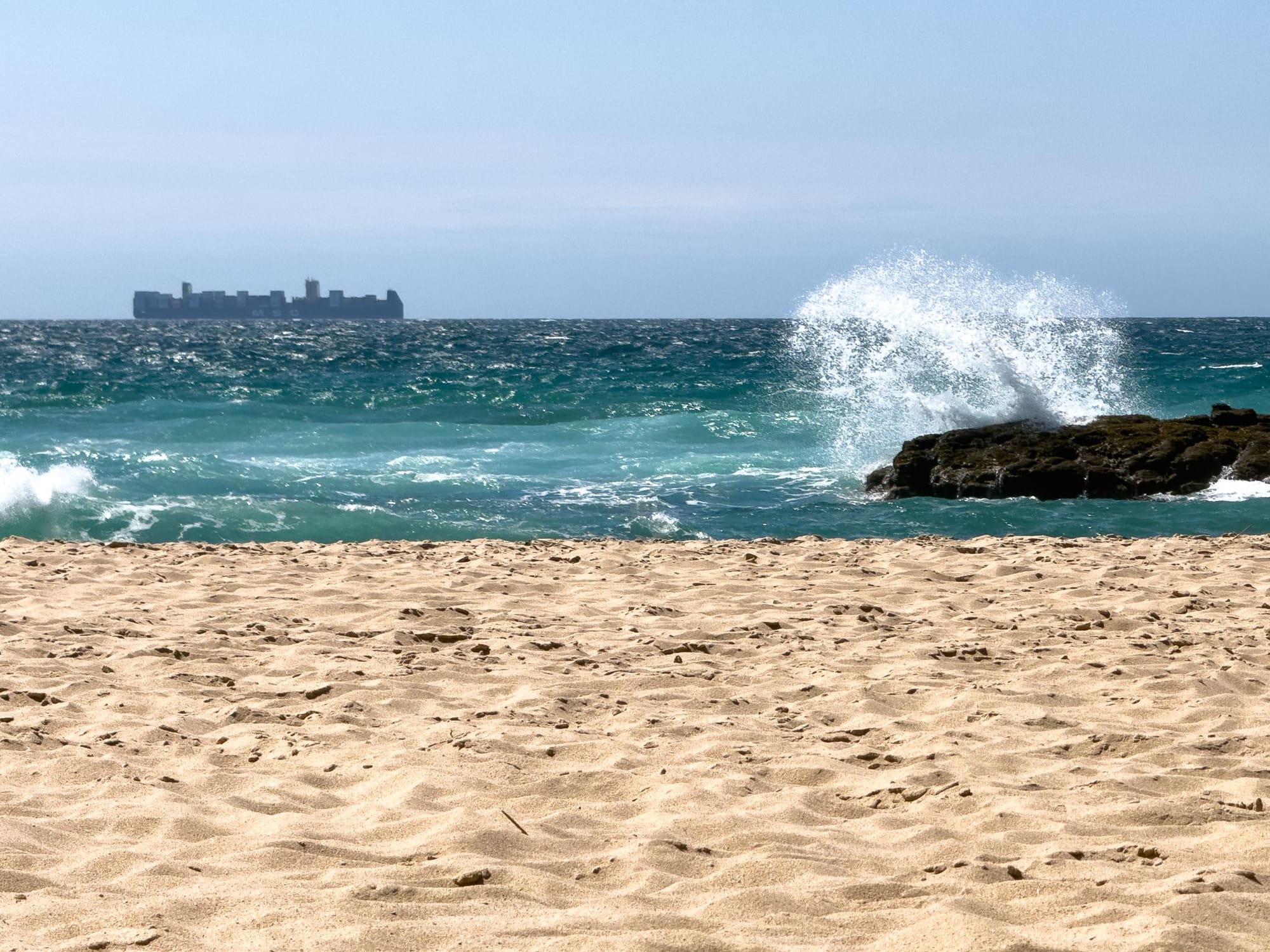
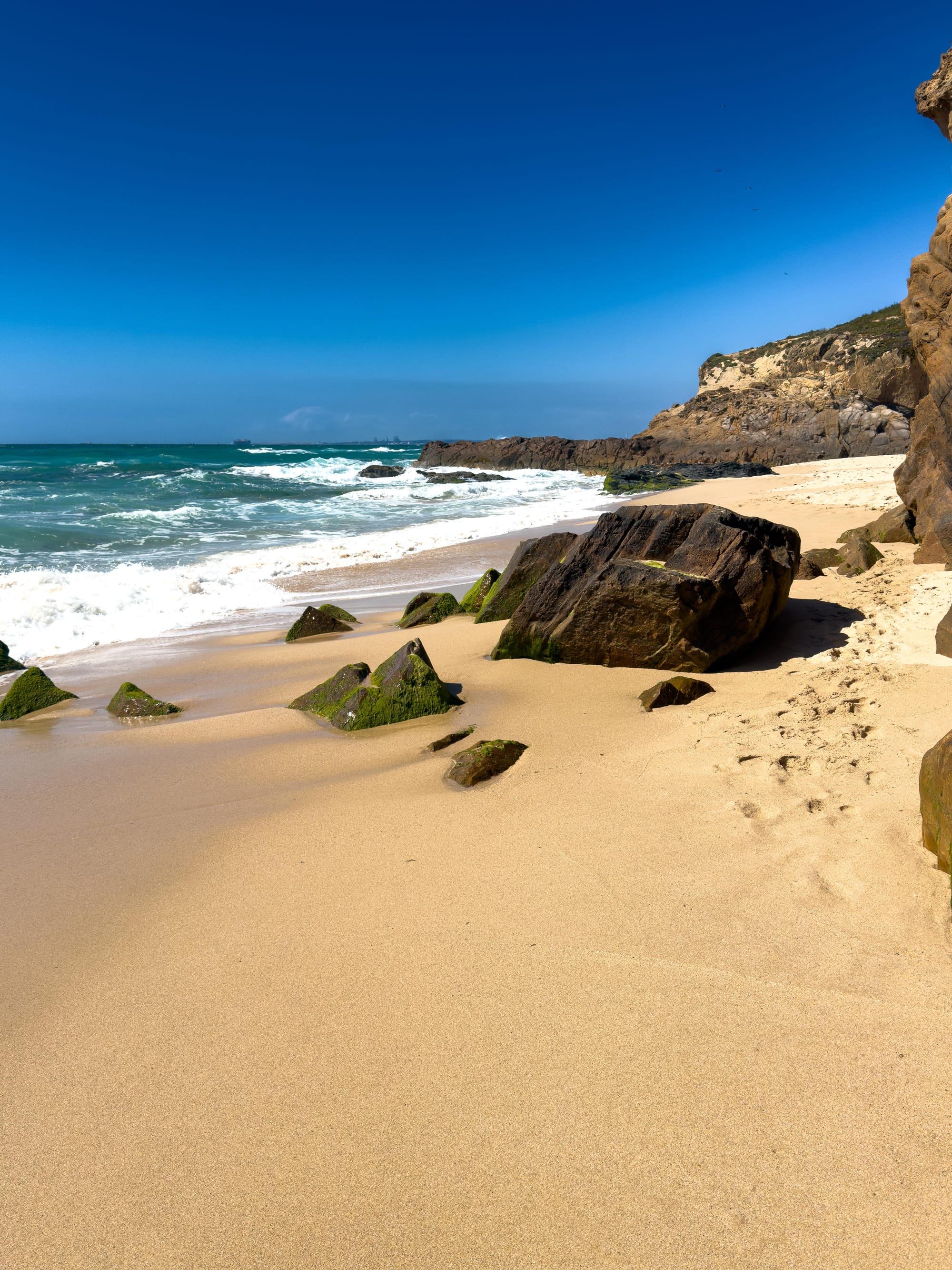
The beach below the restaurant.
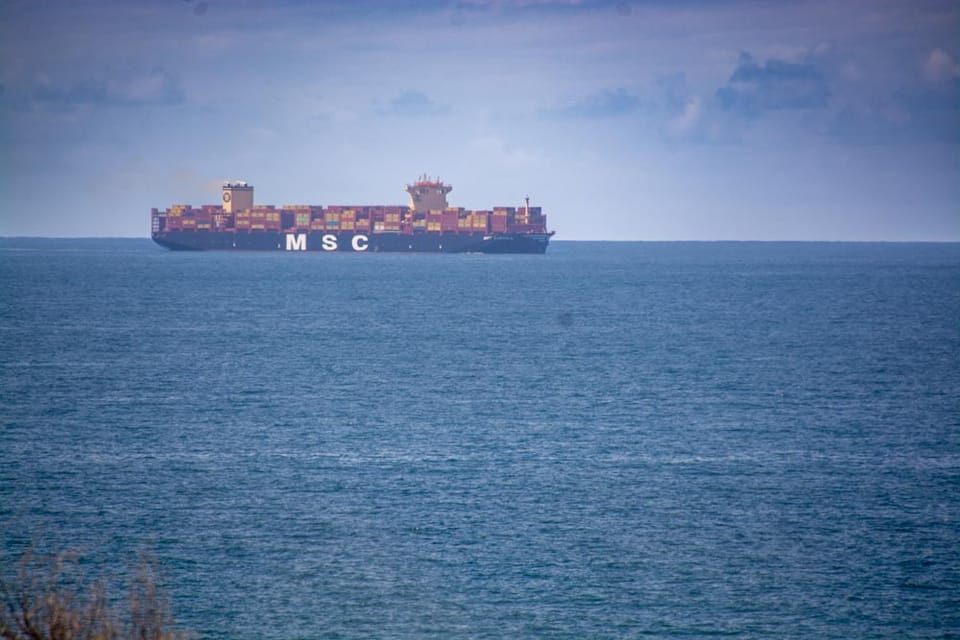
The ships on the horizon
Out at sea, large container ships moved steadily toward the harbor of Sines.
We followed them with our eyes throughout the day. One after another. Slow enough to watch, distant enough to imagine. And because curiosity has become part of how we travel, we checked MarineTraffic to see where they had come from. That detail mattered more than I expected.
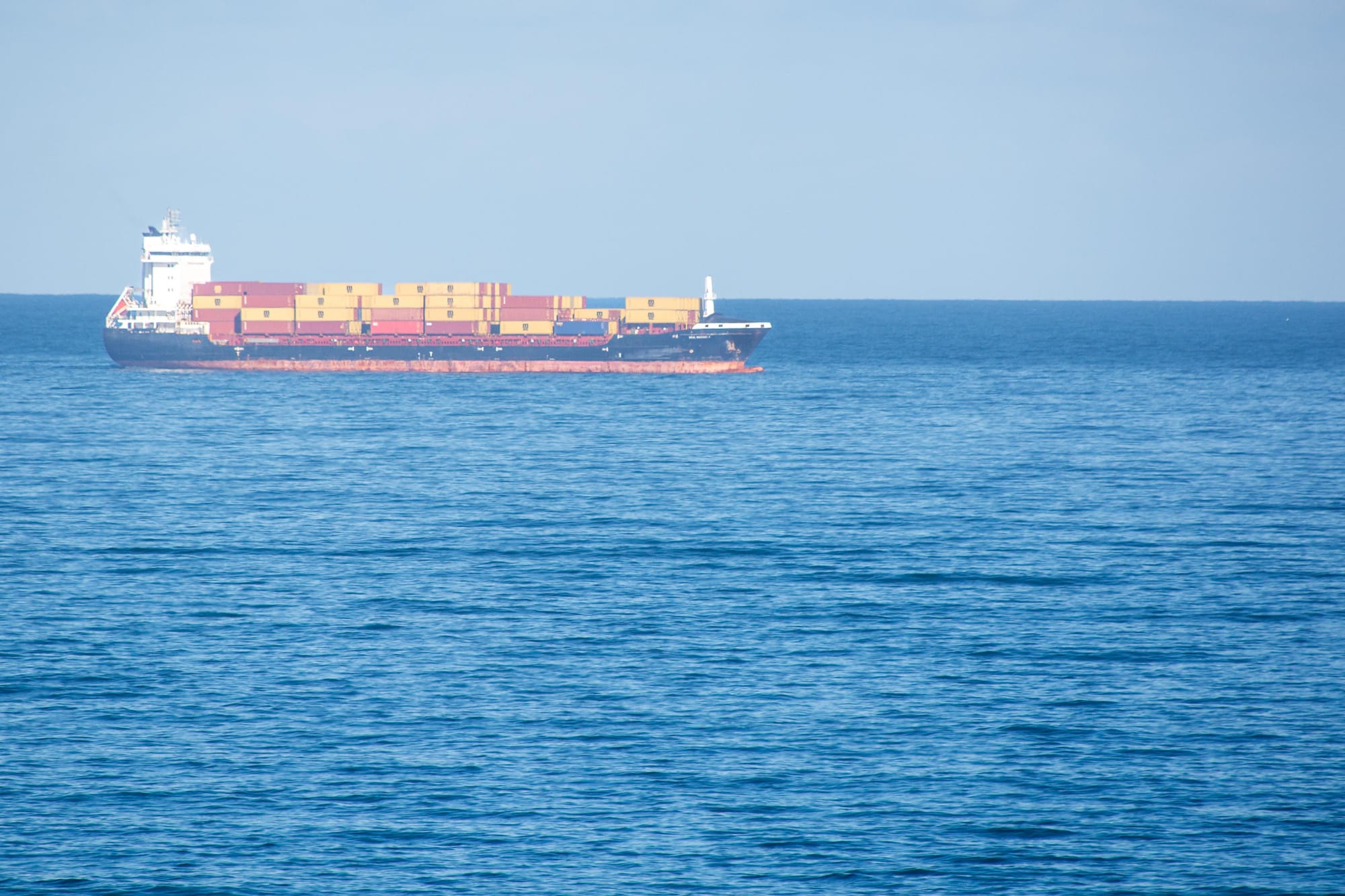
A ship from here. Another from there. Different routes, different ports, different invisible stories crossing the same line of water in front of us. What were they carrying? Where had they left from? Where were they headed next? Even standing still, we found ourselves mentally traveling again.
That was the strange part. The world did not feel smaller because we had come this far. It felt bigger.
Travel often gets described as something that fulfills longing. And sometimes it does, at least for a while. You dream of a place, then you get there, and something inside you settles. But there is another side to it that feels just as true.
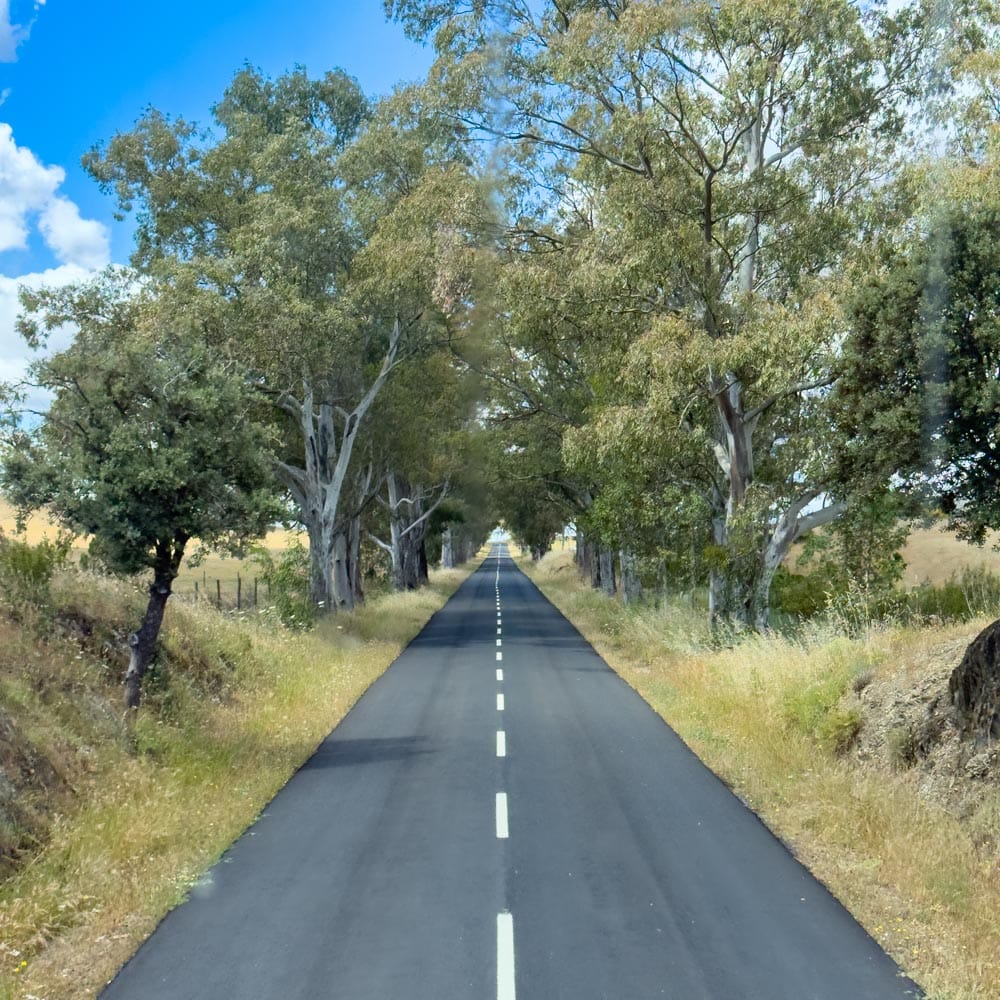
The more we travel, the more aware we become of how little we have seen.
The more we travel, the more aware we become of how little we have seen.
Not in a frustrating way. Not as a complaint. More as a deepening. Each horizon reached opens the view to the next one. Travel does not close the distance. It teaches you how much more there is beyond it.
Fernweh does not end neatly
You arrive somewhere beautiful, somewhere that already felt meaningful before you reached it, and instead of feeling finished, you feel more open. More curious. More aware of all the places, people, stories, and landscapes still outside your own experience.
Not wanderlust as a slogan. Not collecting destinations. Something quieter than that. A longing that grows as your world grows. A sense that discovery does not close the circle. It widens it.
And maybe that is familiar even if you do not live on the road
You might know it from standing at the edge of the sea, from looking out of a train window, from following a plane in the sky, from seeing one street in an unfamiliar town and wondering what lies behind the next corner. You do not need a full-time travel life to recognize that feeling. We only need moments that remind us how much larger the world is than our routines usually allow us to notice.
The horizon does not shrink when you travel. It expands.
Explore. Dream. Discover.