
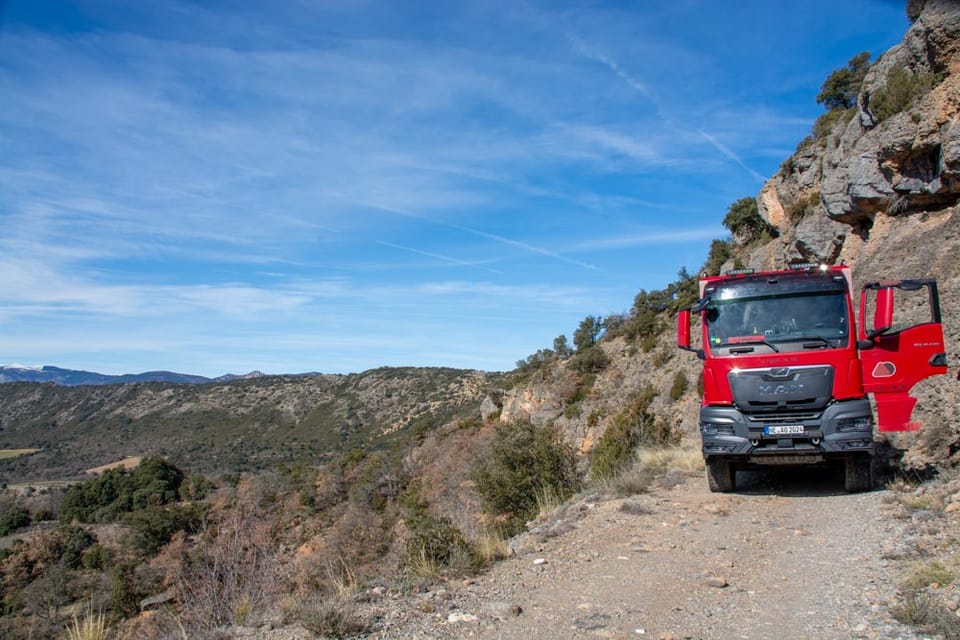
Echoes of the Past: Offroad Days Among Catalonia’s Ruins

There are abandoned places that feel alive, and still have posture.
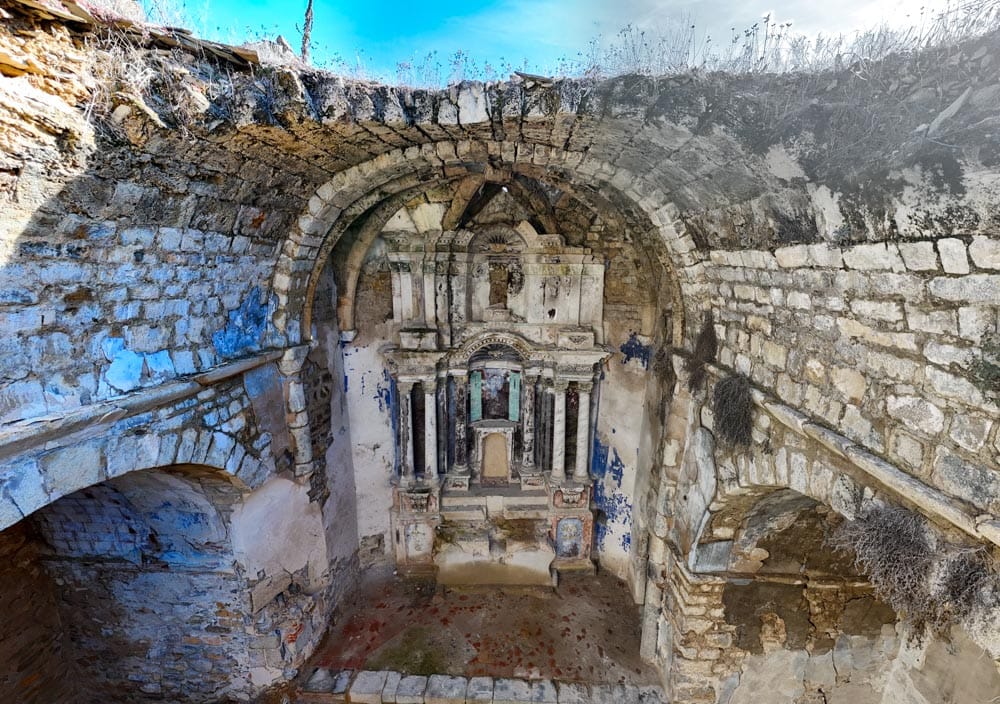
In Pallars Jussà, in the Catalan Pre Pyrenees, we kept finding abandoned villages that still have posture. Ghost towns. Hilltop silhouettes. Stone walls leaning into the wind. A church apse still standing as if it expects the next Sunday. When the light falls late in the day, even ruins can look like they are waiting.
We are painfully aware that we get to step into these stories by choice. We come with a rolling home, time, and the option to leave again. The people who left these villages did not always have that kind of freedom. Their leaving was often a practical decision, made under pressure and necessity, not a romantic one.
The road in, the silence on top
The week began with the kind of driving that makes you speak less. Offroad in Catalonia can be gentle, then suddenly very serious. Tracks narrowed until shrubs brushed the mirrors. The surface turned to loose stone. The gradient pitched up without warning. And then came what we started calling the Hairpins of Hell.
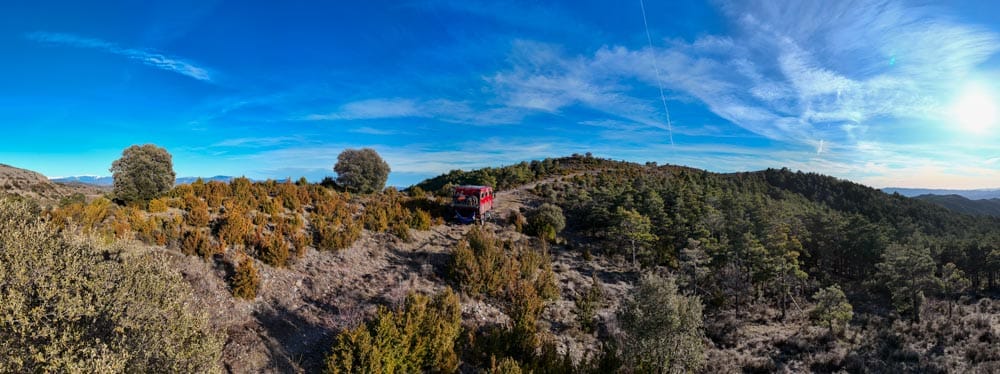
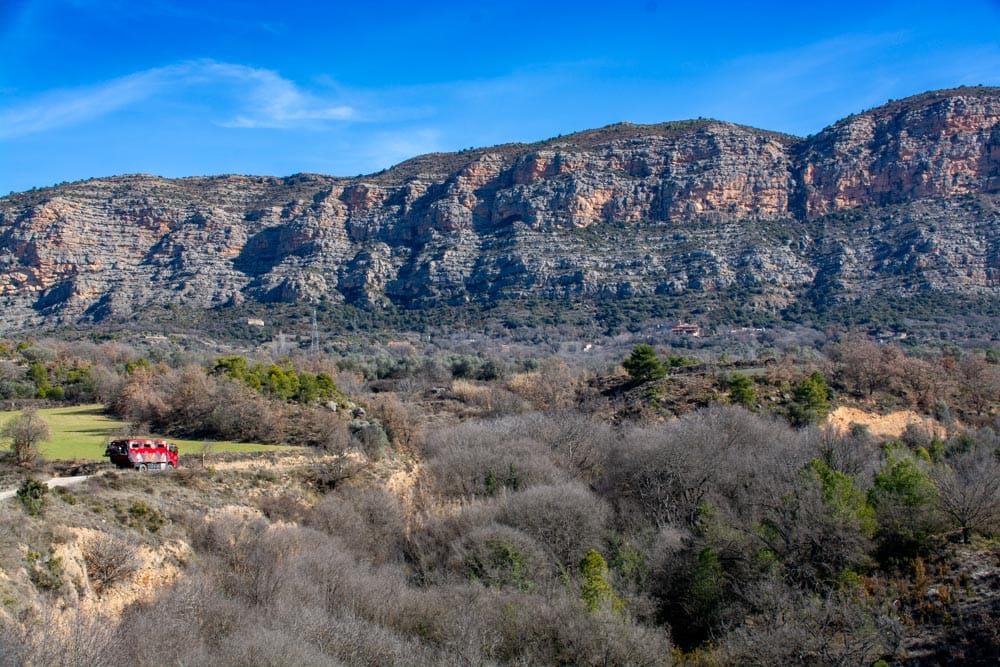
They were the sort of switchbacks that look harmless on a map and feel very personal in real life. Tight corners. Steep drops. Not much room to correct a line. Emil, our red expedition truck, felt like a patient companion here, steady and surprisingly capable, but it was still on us to stay calm. The trick was to go slow enough to stay safe, and steady enough to avoid hesitation.
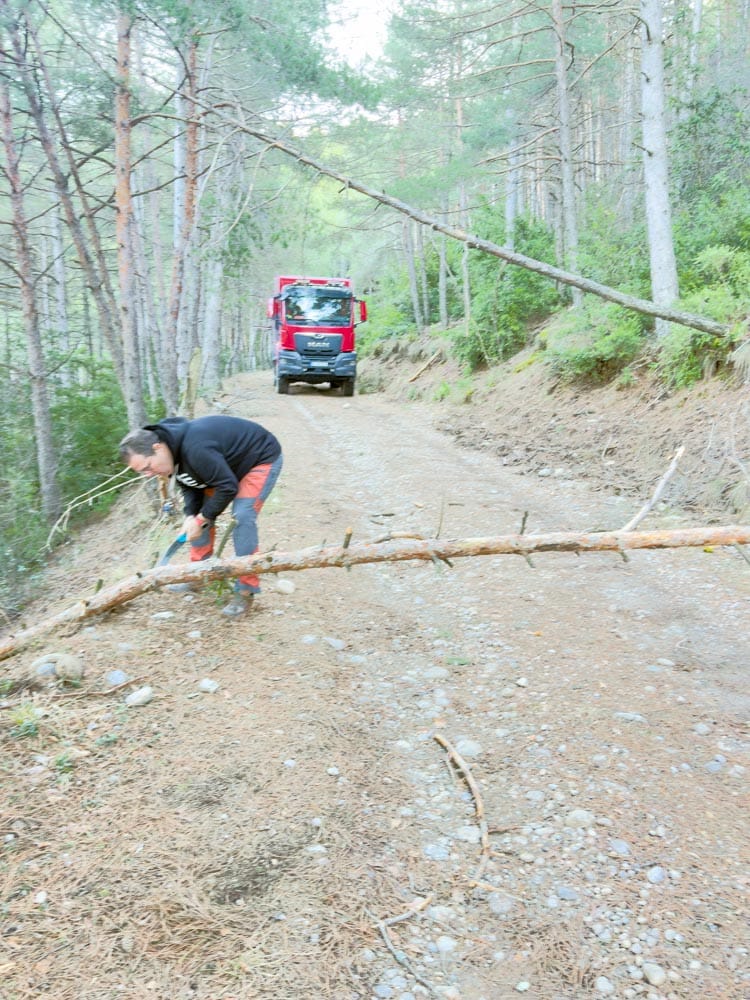
At one point, the track was blocked by fallen branches. Then by small trees, laid across the way like a deliberate gate. We parked, took a breath, and did the unglamorous work. Gloves on. Saw out. Dragging branches to the side. It was not heroic, it was just travel as maintenance.
When we finally crested a ridge and the first roofs appeared, it felt like arriving at a forgotten page in a book.
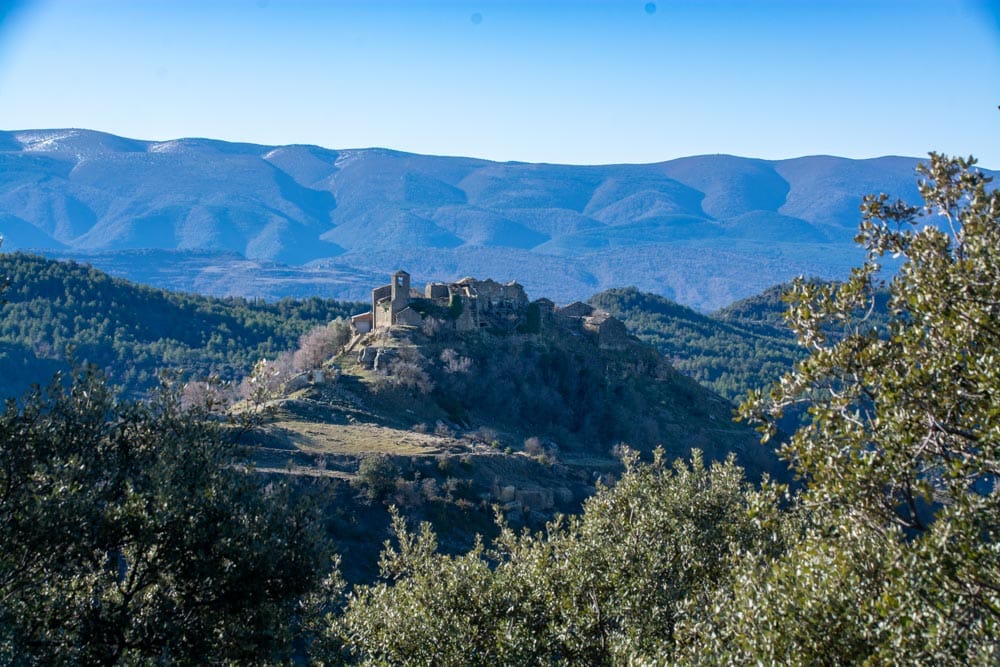
Claramunt, a village that lived above the world
Among the many abandoned places we visited, Sant Pere de Claramunt stayed with us in a very specific way.
It sits so high that the landscape feels rearranged around it. The village can be described as an “eagle’s nest”, perched above 1,000 meters, and when you stand there, you understand why. The wind has a cleaner voice up there. The valleys feel far away, not only in distance but in rhythm.
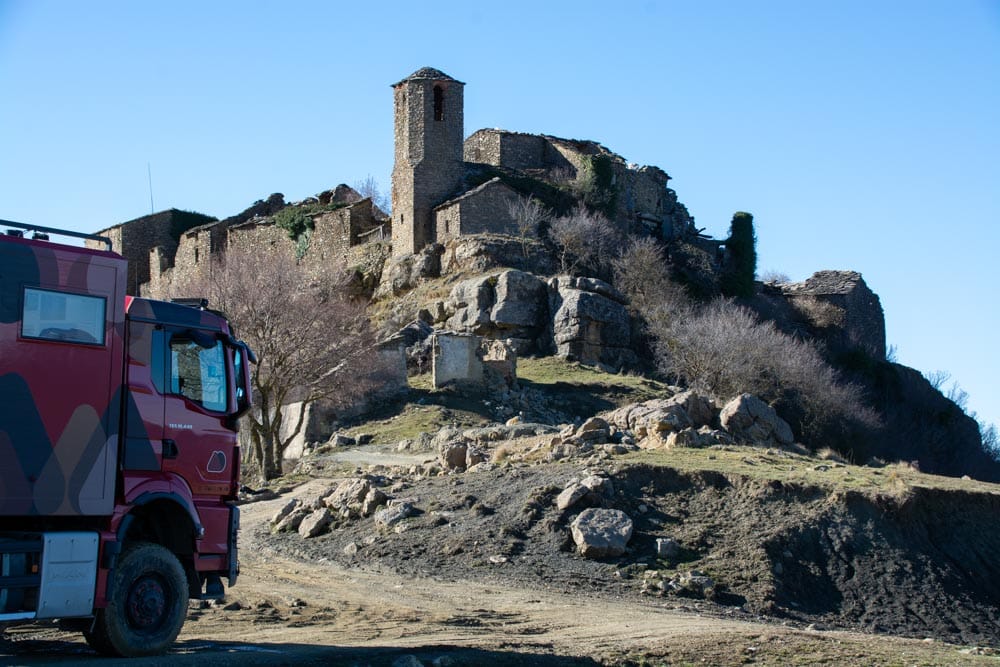
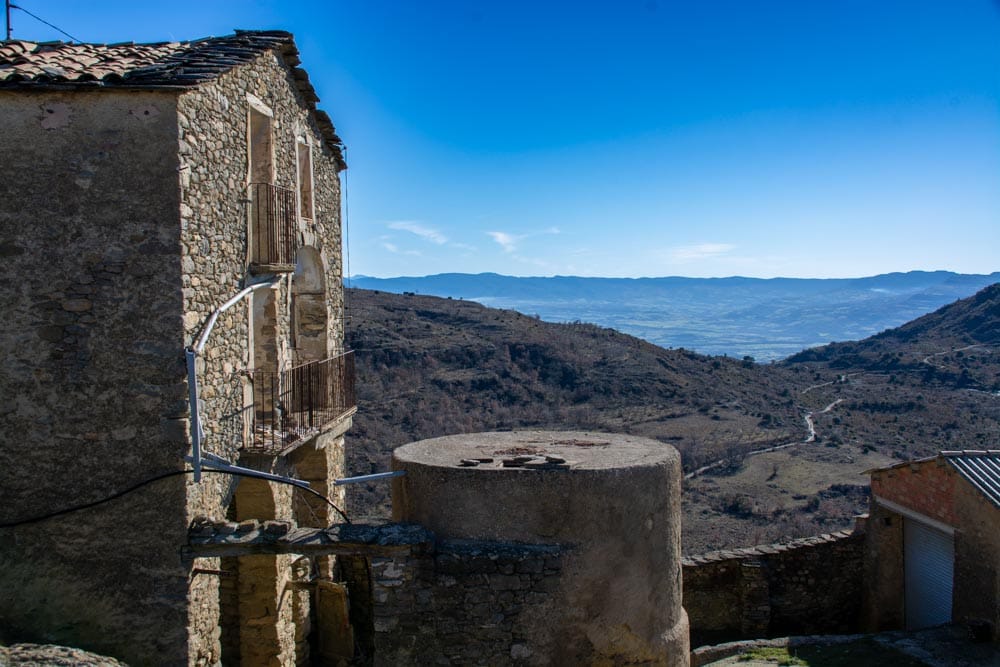
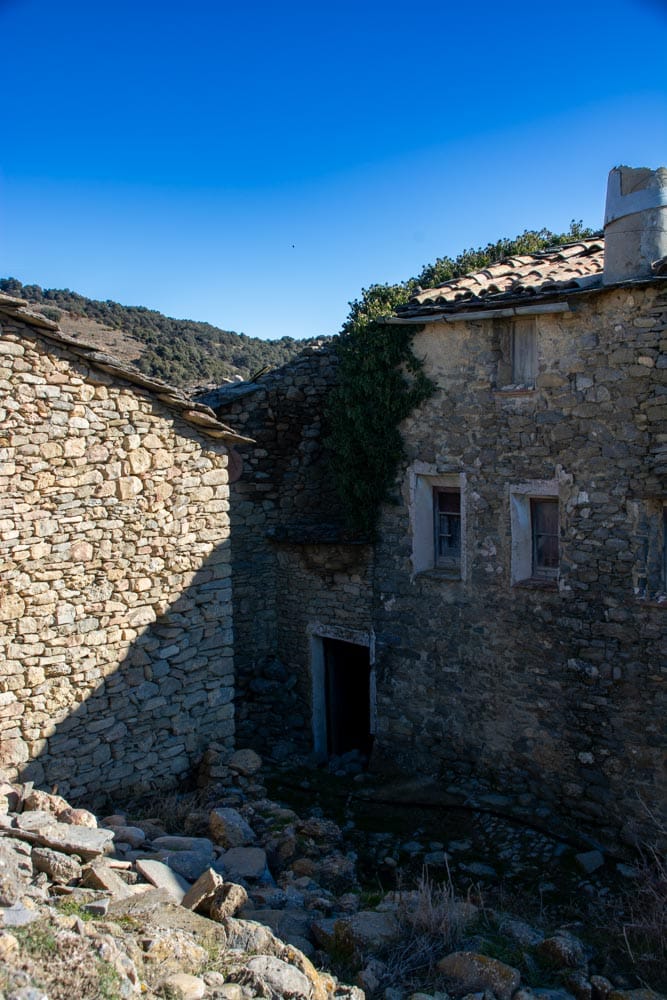
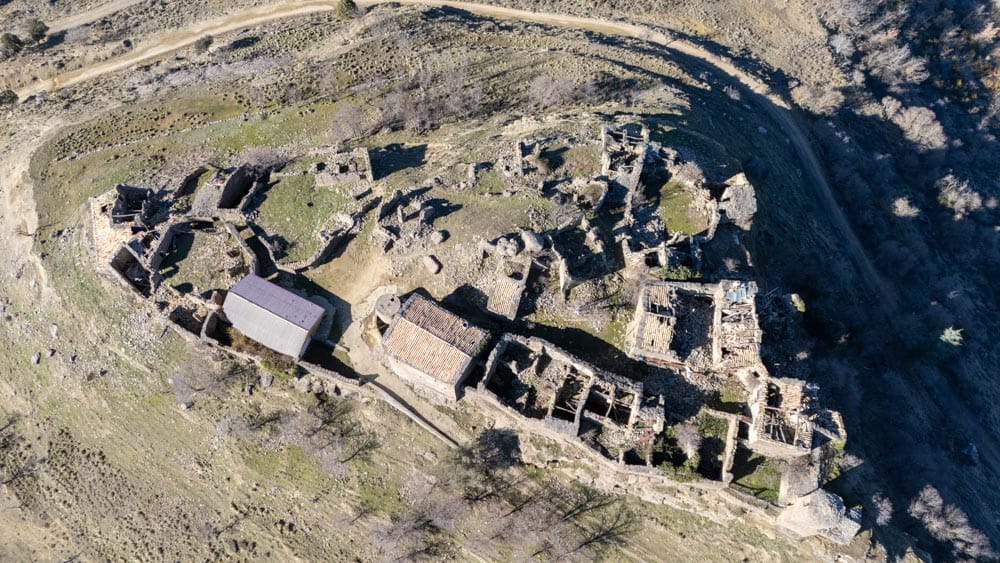
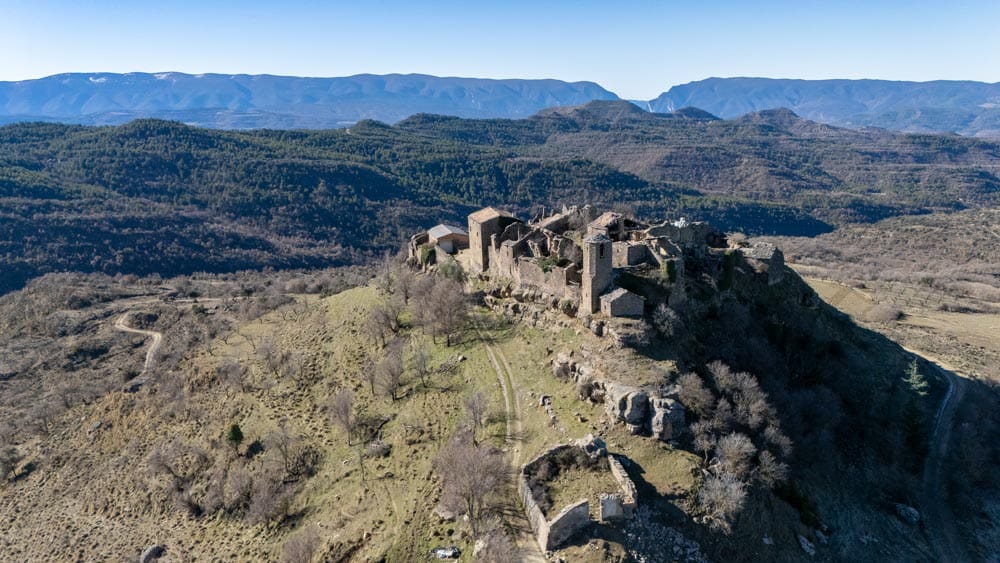
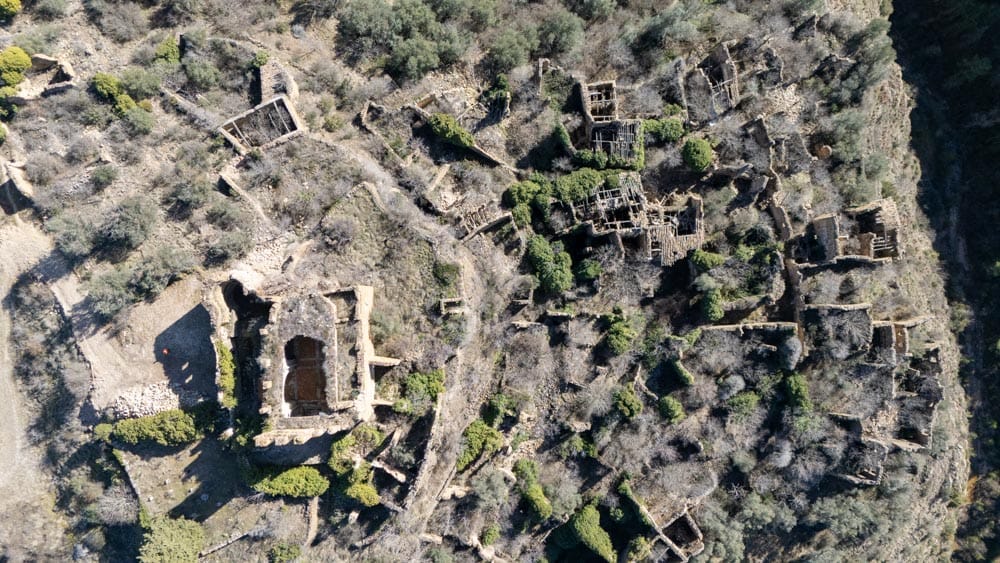
Claramunt's ruins in the Catalan mountains.
Claramunt’s medieval bones are still visible in the layout: stonework that assumes you move on foot, that you know every corner, that the church is both landmark and meeting point. You can also sense the older power structures that shaped this ridge. There are traces of an 11th century defensive logic here, including remains tied to the castle history of the region. Height once meant safety.
Aramunt, a village that could almost adapt
Aramunt Vell shares that hilltop posture and medieval character, but it feels different under your feet.
Where Claramunt is all perch and exposure, Aramunt Vell feels more compact and tucked in. It has the feeling of a place built to hold itself together, described as a “vila closa”, a closed village with portals, shaped by a defensive instinct that turned inward.
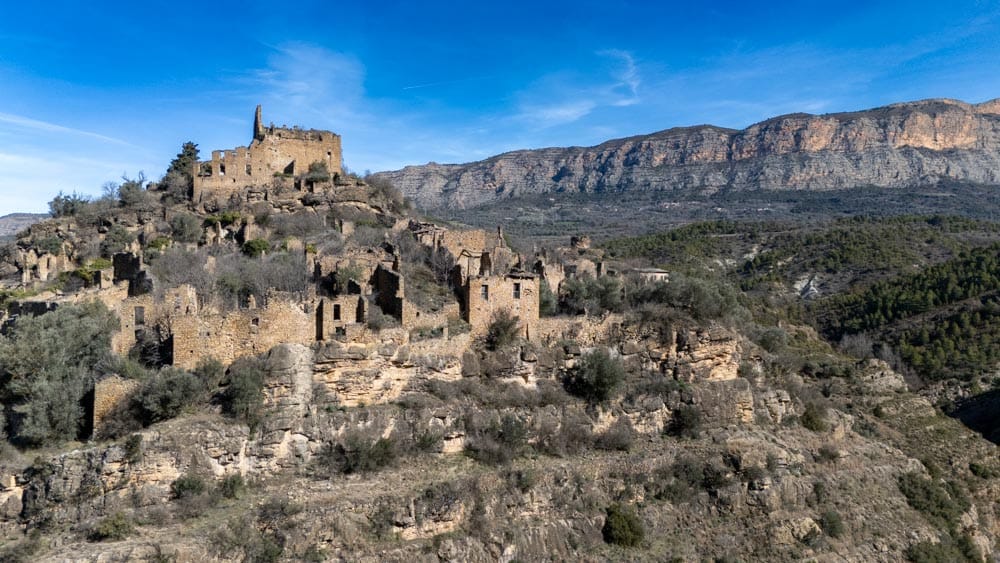
Aramunt tucked at the side of a cliff.
Aramunt also had a slightly different relationship with modern life. Electric light reached it from the 1920s, a thin strand of progress that never arrived in Claramunt at all. That one detail changes the emotional temperature of the ruins. It is not less abandoned, but it hints at a village that tried, briefly, to meet the future halfway.
Standing among these stones, it is easy to romanticize remoteness. We do it too, sometimes. We talk about “quiet” and “escaping”. But the longer we stayed, the more we felt the weight of what isolation actually costs.
In Aramunt Vell, the lanes are steep and tight, never meant for cars. Modern farming machines could not fit, and daily life up there must have been a constant negotiation with gravity. And yet, a small thread of modernity did reach the hill. Aramunt had electric light from the 1920s, a faint sign that the outside world was, at least for a while, still connected.
Claramunt, by contrast, was even more cut off. Even today it is reached only by a demanding forest track, several kilometers of effort between the village and the wider world. And unlike Aramunt, Claramunt never received that thin line of progress. No electricity. No running water. Imagine winter evenings lit only by flame, and the work of hauling water uphill with a donkey, week after week. None of this makes the people who stayed “tougher” than anyone else. It simply shows how much labor can be hidden inside a beautiful view.
The school as the heart of a village
The most heartbreaking common thread we learned about had nothing to do with castles or churches. It was the school. A village can survive without many things, but it struggles to survive without children. When local schools closed, or when kids had to travel down to Tremp or La Pobla de Segur for education, families faced a decision that did not leave much room for nostalgia.
If your child’s future is elsewhere, your life tends to follow.
The closure of the school is the final blow, the moment the village’s slow decline turns into an ending.
We kept thinking about how “leaving” is often portrayed as dramatic, even selfish. But in these villages it looks more like a series of small, rational steps. A family moves first. An elderly couple stays. A roof collapses. A path grows in. Another season passes.
It is one of those truths that reaches far beyond travel. We all build our lives around small anchors. A place where we belong. A routine that holds us. People who depend on us, or whom we depend on. When an anchor disappears, the whole map of our days quietly redraws itself.
What ruins give back
By the time we walked through Aramunt Vell and climbed toward Claramunt, we had seen enough collapsed roofs to understand that these villages are not museums. They are fragile.
A stone step can crumble. A wall can bow. A church can be one storm away from losing its last standing arch. Visiting asks for care and restraint. We moved slowly, touched little, and tried to treat the space less like a backdrop and more like someone’s former home.
And still, these places offered something rare. They offered scale. Up on those ridges, you can sense how life once fit together. Where the animals were kept. How the alleys controlled wind and heat. Why the church was placed where it was. You can also sense the moment the old logic stopped working.
In the end, the most powerful thing was not the drama of decay. It was the quiet precision of it. Nature does not rush. A village can fall apart slowly, the way memories do. Not all at once, but in softened edges.
A thought to carry home
That week, the driving asked for focus. The tree clearing asked for patience. The villages asked for gentleness. But what stayed with us most was a word we did not expect to carry out of a ghost village. Security.
Claramunt and Aramunt were built for it. Height, so you could see who was coming. One side pressed against rock. Narrow approaches that could be defended. Remoteness made a village hard to reach and hard to take. In their time, those features were not romantic. They were practical. They were survival.
And then the meaning of security shifted. The same distance that once protected became a daily burden. The same steep lanes that once slowed an intruder also slowed a cart, a tractor, a doctor, a schoolteacher. What kept the villages safe also kept them apart. Eventually, the cliff edge and the ridge line were no longer advantages. They were friction.
It made me think how often this happens in ordinary life too.
We all search for our own kind of height and security. More cash in the bank account. A job that looks stable from the outside. A routine that keeps the days predictable. Relationships and responsibilities that hold us close to a place. None of those things are wrong. Often they are wise, even necessary.
But sometimes, quietly, they change. The safety becomes weight. The reliable job becomes the thing that keeps a dream from getting daylight. The savings meant to create freedom become a reason to delay living. A relationship that once felt like home becomes a rope that pulls you away from where your heart wants to go.
Standing on those hilltops, we could feel that shift. Just a gentle question that followed us back down to civilization.
We climbed back to Emil, dusty and grateful. The valleys opened again. The world became connected, noisy, modern. Behind us, Aramunt and Claramunt remained where they are, watching over the land, offering their silence to anyone who arrives with respect.
Explore. Dream. Discover.